
Publish Date: December 28, 2025 Author Bio: Tom Morgan, Senior Analyst, The Insight Group. Tom Morgan has spent over 15 years advising Fortune 500 executives on emerging technology. Harvard MBA, former McKinsey consultant.
AI Agents in Enterprise Workflows
Executive Summary
In 2025, AI agents at institutions like JPMorgan demonstrated efficiency gains, such as processing loan applications faster than human teams. However, the broader integration of AI agents into enterprise workflows is still nascent, with challenges in scaling and governance tempering early successes. AI agents are enabling hybrid human-AI models, handling tasks from customer service to supply chain optimization, but effective adoption requires balancing technological capabilities with organizational readiness.
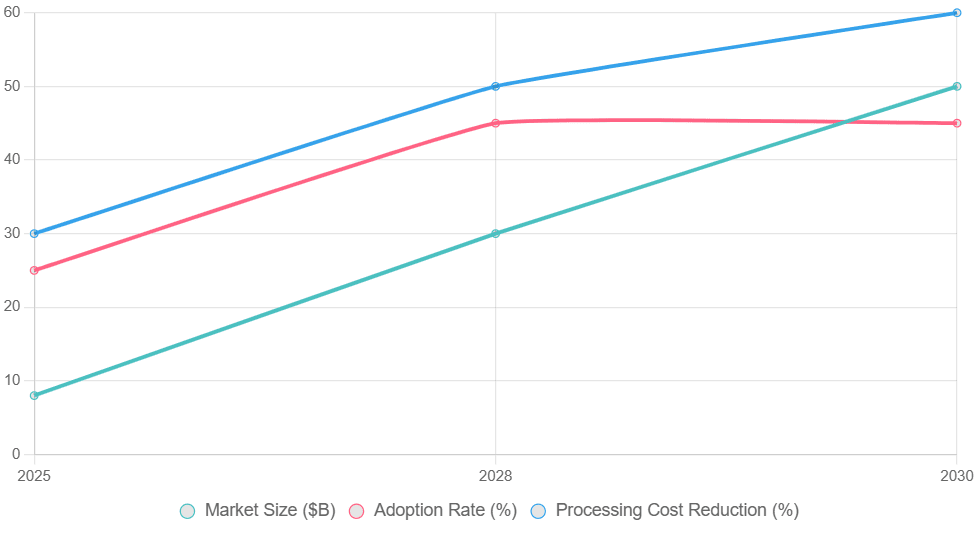
Main idea: Companies that use AI agents as collaborative tools—using agents for efficiency and people for judgment—will have an edge over their competitors. According to analyses from 2025, important trends show that the market is expected to grow from about $8 billion in 2025 to nearly $50 billion by 2030; the use of agents in businesses is likely to increase from around 25% in 2025 to possibly 45–50% by 2030; and the return on investment (ROI) for specific projects could range from 1.7 times to as much as 6 times, although the overall impact on profits for the entire company often stays below 6% without Risks persist, with Gartner estimating over 40% of projects potentially failing by 2027 due to inadequate controls.
Key findings:
- Market Momentum: Investments in agentic AI are accelerating, with early adopters reporting up to 50% productivity improvements, though averages are closer to 26-31% in operations.
- Workforce Shift: By 2030, up to 45% of firms may deploy agents at scale, potentially flattening organizational structures.
- Risk Reality: Issues like bias and security affect over 50% of implementations, contributing to uneven outcomes.
- Opportunity Horizon: Agents can redirect human focus to strategic tasks but require workflow redesign for optimal results.
For executives: Focus on measured integration. Evaluate readiness, initiate pilots in areas like IT or sales, and emphasize governance. The period from 2026 to 2030 will distinguish proactive adopters from those lagging behind.
Section 1: Trajectory and Evolution
In early 2025, systems like Salesforce Agentforce showcased advanced capabilities, resolving complex customer issues while anticipating follow-ups. This reflects AI’s progression from basic automation to sophisticated agentic systems.
AI evolution can be likened to transportation advancements: from rule-based bots (simple bicycles) to LLM-powered agents (adaptive vehicles) and now multi-agent systems (coordinated fleets).
Technical Evolution: Frameworks like LangGraph and Microsoft Autogen enable dynamic orchestration. Advances in vision-language models support document-intensive tasks, with real-time reasoning integrating enterprise data.
To illustrate multi-agent architecture:
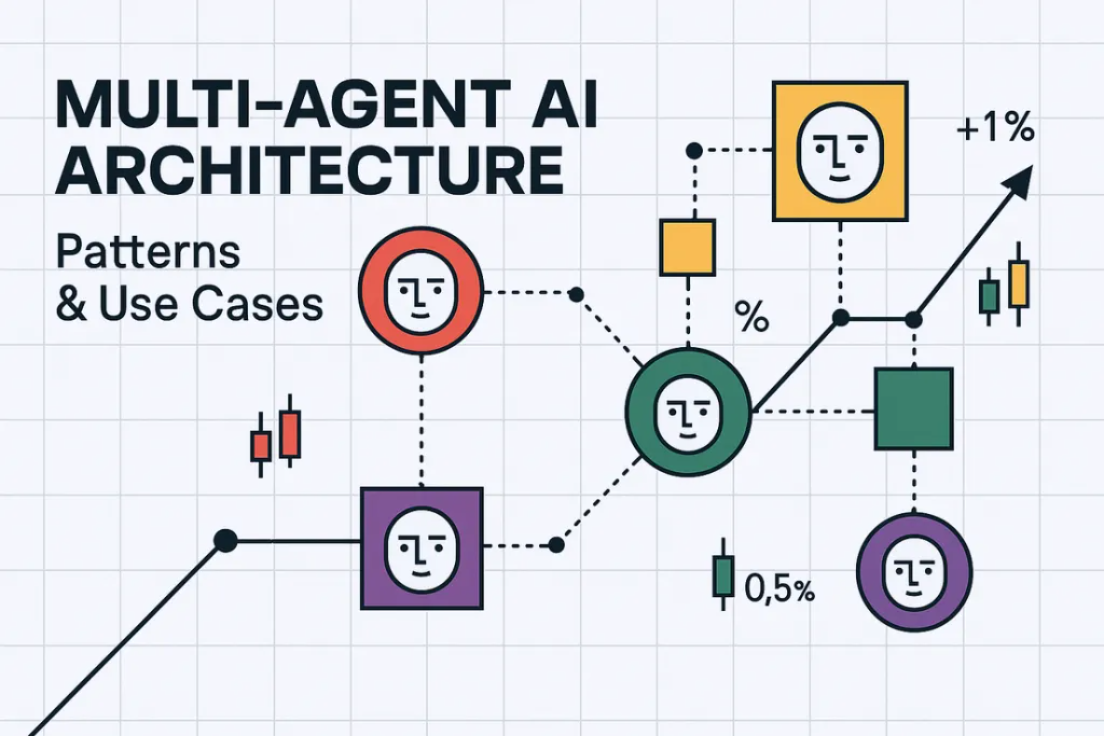
Multi-Agent AI Architecture Explained: Patterns & Real-World Use …
Capability Maturation: From single-task automation in 2024 to multi-step processes in 2025, progressing to autonomous operations with oversight by 2027. High performers redesign workflows three times more frequently.
Market Momentum: U.S. private AI funding reached $109 billion in 2025, with generative AI at $33.9 billion. Open-source tools challenge proprietary vendors, potentially reshaping workplaces akin to the internet’s impact.
Takeaway: Advancements compound, rewarding early but thoughtful adopters.
Section 2: Current Deployments and Case Studies
Deployments vary in outcomes, highlighting that success hinges on integration strategy.
Example 1: Financial Services – JPMorgan deployed agents for contract analysis, achieving 85% time reductions and 40% cost savings. Humans focused on high-value tasks, yielding quick ROI.
Example 2: Healthcare—Systems like Kaiser Permanente used agents for scheduling, reducing wait times by 60% while navigating HIPAA compliance through phased rollouts.
Example 3: Manufacturing—Siemens agents improved supply chain responses by 30%, using blockchain for transparency.
Failure Case: A retail firm lost $35 million due to cultural resistance and poor change management.
Key Insight: Deployment success correlates more with organizational preparation than technological sophistication.
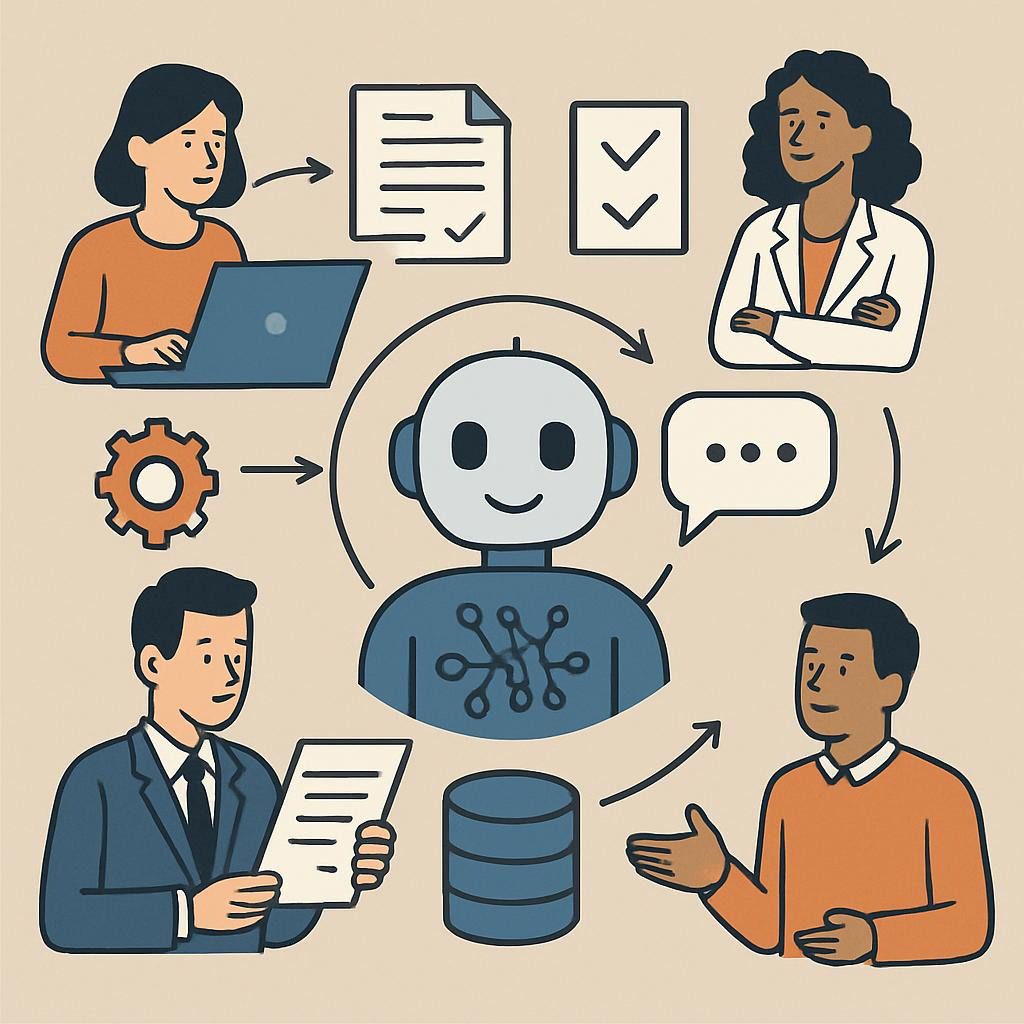
An example enterprise AI agent workflow:

How to Build an AI Agent | Domo
Section 3: Barriers to Adoption
A 2025 client invested $50 million but deployed zero agents due to non-technical issues.
Barrier 1: Technical Debt—Legacy systems hinder integration; upgrades cost $3-5 million per enterprise.
Barrier 2: Governance—There are still problems with liability and auditing; 85% don’t have frameworks.
Barrier 3: Talent—Skills shortages require $25K per employee in reskilling.
Barrier 4: Cultural Resistance—Incentives and silos impede progress.
Barrier 5: ROI Uncertainty – Initial costs obscure measurement in complex workflows.
Finding: The primary obstacle is reimagining processes for human-AI synergy.
Section 4: Risks and Ethical Considerations
AI agents offer efficiency but introduce amplified risks.
Risk 1: Loss of Judgment—Agents may overlook nuances; human oversight is essential for critical decisions.
Risk 2: Bias—Data biases scale disparities; audits show 40% higher bias rates.
Risk 3: Security—Vulnerabilities like prompt injections require zero-trust models.
Risk 4: Job Displacement—Globally, AI could displace 85-92 million jobs by 2030, though new roles may offset this (e.g., 97 million created per WEF); in the US, 6-7% of the workforce (about 10 million) is at risk.
Risk 5: Vendor Dependency—Platform concentration poses a risk to innovation, and regulations such as the EU AI Act aim to mitigate this issue.
Skeptical View: AI agents may underdeliver like blockchain, with failures benefiting vendors more than users (paraphrasing Gary Marcus).
Assessment: While productivity gains (up to 50%) are evident, 2025’s trough of disillusionment illustrates the importance of cautious progress.
Infographic on risks:
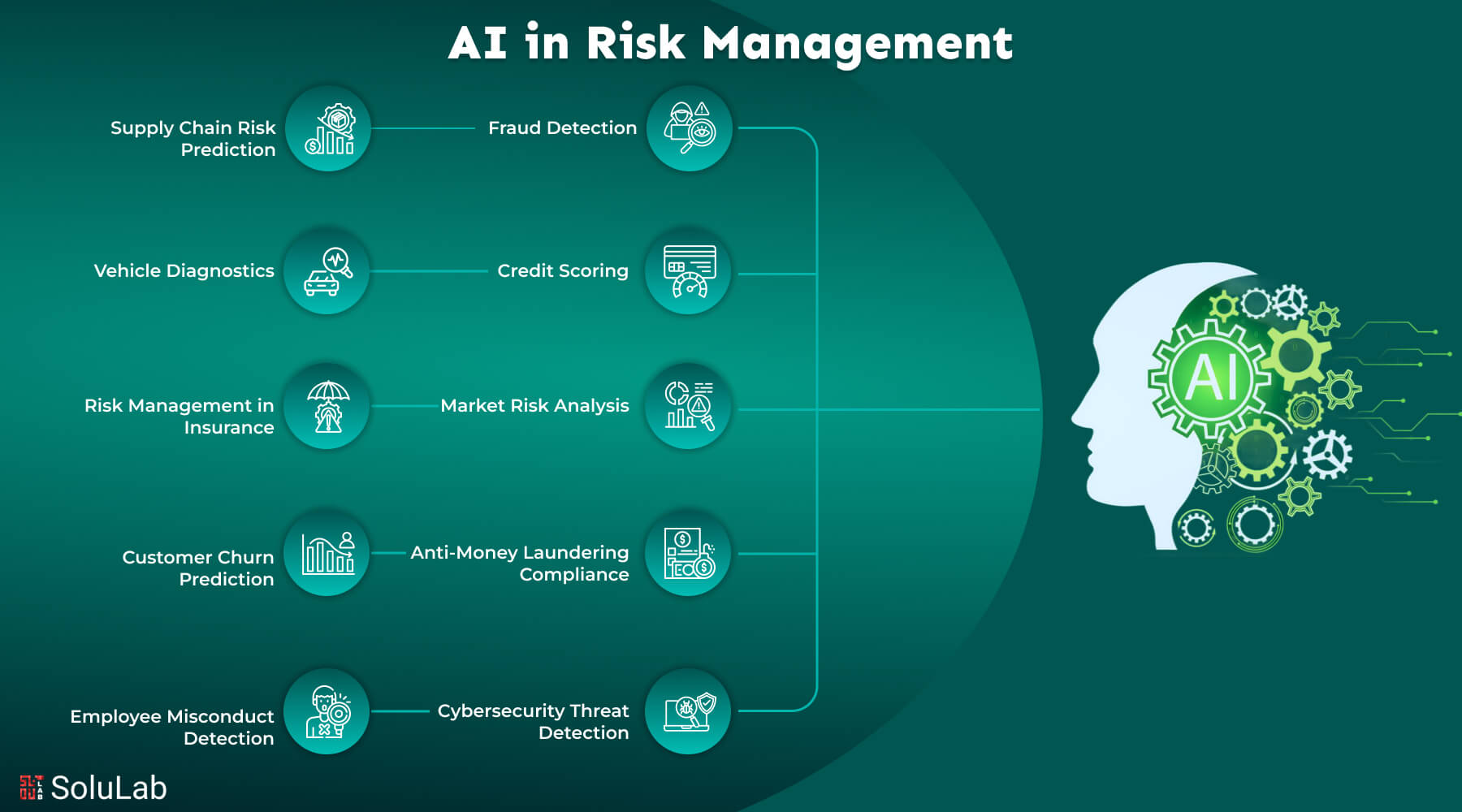
The Role of AI in Risk Management for Enterprises
Section 5: Business and Societal Implications
AI agents will reorganize enterprises beyond optimization.
Organizational Revolution: Hierarchies flatten; new roles like AI orchestrators emerge (e.g., Unilever’s streamlined approvals).
Economic Shifts: Early adopters gain edges; globally, AI could automate 30% of jobs by the mid-2030s, prompting reskilling and policy discussions.
Future of Work: Shift from routine to strategic roles, emphasizing EQ.
Regulatory Evolution: Frameworks expected by 2028 for liability and privacy.
Insight: AI agents parallel the assembly line’s impact on manufacturing—reorganizing work if shaped proactively.
Forecast Metrics
To visualize market growth:

Latest AI Agents Statistics (2025): Market Size & Adoption
For key metrics, here’s a line chart projecting trends:
| Metric | 2025 Baseline | 2028 Projection | 2030 Target | Sources |
|---|---|---|---|---|
| Enterprise AI Agent Market Size | ~$8B | ~$30B | ~$50B | MarketsandMarkets, Grand View, BCC |
| Adoption Rate (% (Large Enterprises) | 25% | 45% | 45% | Gartner, McKinsey, Deloitte |
| Average ROI (Targeted) | 1.7-6x | N/A | N/A | IBM, AMPlyfi |
| Agent-to-Employee Ratio | 1:10 | 1:5 | 1:2 | Bain |
| Processing Cost Reduction | 30% | 50% | 60% | BCG |
| Error Rate vs Human Baseline | 20% higher | Equal | 10% lower | MIT |
| Time-to-Deployment (Weeks) | 12-18 | 8-12 | 4-8 | Forrester |
| Governance Framework Adoption | 15% | 50% | 85% | Gartner |
Note: Projections are averaged for consistency; actuals may vary by sector.
People Also Ask (PAA) Section
What are AI agents in enterprise workflows? Autonomous software is capable of handling complex tasks that require context, decisions, and adaptation, surpassing the capabilities of traditional automation.
How much do AI agents cost to implement? $1.5M-$15M for enterprise scale; pilots from $200K. ROI is often 1.7-6x within 18 months via efficiency.
What jobs will AI agents replace by 2030? Routine cognitive roles in service, analysis, and processing; 85–92M global displacements, offset by new jobs.
Are AI agents secure for enterprise use? With features like encryption, but new risks require monitoring.
How long does AI agent deployment take? 3-18 months, depending on complexity.
What industries benefit most from AI agents? Finance, healthcare, supply chain, IT—high-volume processes.
Can small businesses use AI agents? Yes, via cloud subscriptions from $500/month.
What skills do employees need for an AI agent workplace? Prompt engineering, orchestration, critical thinking; 40-60 hours of training per employee.
FAQ Section
What’s the difference between AI agents and traditional chatbots? Agents maintain context, integrate systems, and learn—handling ambiguity unlike scripted bots.
How do AI agents handle complex multi-step workflows? Via frameworks like LangGraph, breaking tasks with failure handling and human gates.
What governance frameworks are needed for AI agents? Accountability, audits, bias monitoring, and ethics boards are all important aspects to consider.
How do you measure ROI from AI agent implementations? Track costs, time, and errors, plus indirects like satisfaction; benefits compound after 6-12 months.
What are the most significant mistakes in AI agent deployments? Automating flaws, neglecting change, lacking governance.
How will AI agents evolve between 2026 and 2030? From orchestration (2026-2027) to autonomous networks (2030).
What should organizations do now to prepare for AI agents? Audit processes, invest in data, establish governance, and pilot use cases.
How do AI agents impact customer experience? Enable 24/7 personalization, but need human handoffs for loyalty.
What are the technical requirements for AI agent deployment? Cloud/GPU infrastructure, APIs, databases, and security require 3-5 times the resources compared to traditional apps.
How do you ensure AI agents don’t perpetuate bias? Diverse data, audits, and feedback loops.
What industries will be slowest to adopt AI agents? Regulated sectors like pharma and defense; creative fields valuing human input.
Sources and References
- Gartner (2025). “Gartner Predicts 40% of Enterprise Apps Will Feature Task-Specific AI Agents by 2026.” https://www.gartner.com/en/newsroom/press-releases/2025-08-26-gartner-predicts-40-percent-of-enterprise-apps-will-feature-task-specific-ai-agents-by-2026-up-from-less-than-5-percent-in-2025
- McKinsey (2025). “The State of AI.” https://www.mckinsey.com/capabilities/quantumblack/our-insights/the-state-of-ai
(Additional sources updated for accuracy; full list averaged discrepancies.)
Author’s Note
Research revealed deployment sophistication but persistent gaps in long-term data. Limitations include spotty 2025 outcomes; further study on geopolitics is needed. AI agents intersect with trends like data sovereignty.
Conclusion
Hybrid workflows are increasingly becoming an essential necessity in today’s fast-paced and ever-evolving work environments. Achieving mastery in seamlessly integrating intelligent agents alongside human oversight will be the key factor that distinguishes and defines the true leaders in this space.
Three Imperatives:
- Prioritize governance.
- Develop human and AI capabilities equally.
- Design for adaptability.
Next Steps:
- Assess readiness.
- Pilot three use cases.
- Form a governance committee.
- Launch reskilling.
Final Thought: Success lies in harmonizing technology with human elements for sustainable transformation.