

25 AI Shopping Trends That Are Reshaping Retail Right Now
Retail’s transformation isn’t coming — it’s here. From autonomous agents completing purchases without a single tap, to AI that knows you’re about to run out of coffee before you do: these are the 25 shifts every brand, retailer, and marketer needs to understand today.
TL;DR — The Short Version
- Agentic commerce is the biggest structural shift: AI agents now complete purchases end-to-end, bypassing traditional search funnels entirely.
- 45% of consumers already use AI for shopping decisions. Brand visibility now depends on AI optimization, not just SEO or paid ads.
- Hyper-personalization has moved beyond segmentation — decisions happen per-person, per-moment, in real time.
- Visual search, virtual try-on, and AR product preview are converting at rates traditional search cannot match.
- If your product data isn’t structured and machine-readable today, AI agents will skip you tomorrow.
Should You Even Care About This?
The honest answer: these trends are not all equally urgent for every business. The framework throughout this piece will tell you which to prioritize when.
Why 2026 Is Different — Not Just More of the Same
Every year brings a new wave of “AI will transform retail” predictions. Most of them describe incremental improvements dressed up in dramatic language. This year is genuinely different, and the reason is architectural.
Before 2025, AI in retail was reactive: it answered queries, recommended products, flagged fraud. In 2026, the dominant shift is AI becoming agentic — it perceives a goal, makes decisions across multiple steps, and takes action autonomously. That’s a different category of technology, with different implications for every part of the commerce stack.
IDC has designated 2025–2026 as “AI pivot years,” marking the transition from experimentation to scaled adoption. During Cyber Week alone, AI-driven interactions influenced approximately $67 billion in global online sales — roughly 20% of total digital orders, according to Salesforce data. That number was near zero three years ago.
What follows are the 25 most consequential trends driving that shift — organized not as a buzzword list, but as a decision map.
Trends 1–5: The Agentic Revolution
This is the most disruptive cluster. These five trends are not incremental — they change the fundamental architecture of how commerce happens.
Agentic Commerce — AI Buys On Your Behalf
45% of consumers already use AI for shoppingAgentic commerce is the model in which autonomous AI agents act as proxies for buyers — executing the full purchase lifecycle (discovery, authorization, payment, fulfillment) from a goal rather than a click. A user says “order running shoes under £90 that arrive by Friday,” and the agent evaluates options across merchants and completes the transaction, within preset spending limits and preferences.
Concrete examples live: ChatGPT’s “Buy it in ChatGPT” feature is live for US users; Google launched “Buy for me” buttons across AI Mode and Gemini; Walmart integrated its Sparky assistant into ChatGPT and reports roughly 2× as many new customers versus traditional search channels. This is not a roadmap item — it’s operational.
The implication most brands miss: If your product data isn’t machine-readable and structured, agents won’t surface you. They don’t browse — they query APIs and parse structured data.
Conversational AI Shopping Assistants Replace Search Bars
58% prefer AI tools over search engines in 2025 (up from 25% in 2023)The shift from keyword search to conversational discovery has crossed a critical adoption threshold. In many workflows, shoppers no longer type “blue running shoes size 10” — they tell an AI “I need shoes for a half-marathon in October, I overpronate, budget around £100.”
Amazon’s Rufus (powered by custom LLMs, processing tens of millions of queries with under 300ms latency), Walmart’s Sparky, and Sephora’s ChatGPT-integrated assistant are all live examples. These aren’t chatbots with a shopping skin — they’re goal-oriented assistants that understand context, compare products, and guide the full decision.
What gets wrong: Most brands are still optimizing for keyword search. The new optimization target is AI recommendation retrieval — whether your product shows up when an AI is asked a relevant intent question.
The Machine-Readable Commerce Layer
Products without schema markup get skipped by agentsAs agents do the shopping, they depend entirely on structured, consistent, real-time data. This is driving a rapid shift toward what infrastructure teams call the “machine-readable commerce layer”: exposing product, pricing, and inventory data via APIs; ensuring schema.org Product markup on every PDP; and maintaining completeness across all product attributes.
Agents do not guess. If your product lacks proper markup or has inconsistent attribute data, the agent moves to a competitor that doesn’t. Retailers who invested in this infrastructure in 2025 are now capturing disproportionate agent-driven traffic.
Agentic B2B Procurement
Forrester: 1 in 5 sellers will face AI-powered buyer agents by 2026The agentic shift isn’t only consumer-facing. In B2B, AI agents are automating complex purchasing, inventory renewal, and invoice reconciliation — connecting with vendor systems, managing supply chain procedures, and in some workflows, negotiating prices autonomously. Forrester predicts that 1 in 5 sellers will be compelled to respond to AI-powered buyer agents with dynamically delivered counteroffers via their own seller-controlled agents. B2B commerce is heading toward a world of agent-to-agent negotiation.
AI-Powered Price Discovery Reshapes Deal-Finding
17% of AI shopping users reported finding better deals in 2025AI-powered assistants can now scan a broad universe of online retailers, promotions, and historical pricing in seconds. The consumer who used to spend 20 minutes on price comparison sites now gets that outcome in a conversational turn. In 2025, 17% of consumers using AI tools for online shopping reported finding meaningfully better deals as a result, with 20% more planning to adopt this behavior. Dynamic discounting and real-time price matching are no longer just competitive tactics — they’re table stakes for staying visible in AI-mediated discovery.
Trends 6–10: Hyper-Personalization at Scale
Personalization has been promised for a decade. In 2026, it’s finally delivering at the granularity that the promise always implied — not segment-level, but per-person, per-moment.
Real-Time, Per-Person Decision Engines
Retailers leading in personalization achieve up to 40% higher revenueThe distinction that matters: most “personalization” today is still segmentation. Many shoppers see the same hero banner because they share a demographic trait or browsed the same category last week. Hyper-personalization works differently — it makes experience decisions at the individual level, in real time, using behavioral signals, contextual data (device, location, time), and business constraints (inventory availability, margin targets).
49% of Americans say AI recommendations affect their purchases. 64% say they’d be willing to buy products suggested by generative AI. The infrastructure requirement is non-trivial: unified customer data, real-time identity resolution, and an omnichannel activation layer that can apply the same decision logic across email, on-site, and paid media simultaneously.
AI-Generated Dynamic Product Content
51% of marketing leaders already use AI for content generationBeyond recommendations, generative AI is now creating product descriptions, email copy, and campaign creative in real time — dynamically adjusted per user segment, per channel, and per context. A product page for a camping tent might automatically render technical spec copy for an experienced hiker versus benefit-led lifestyle copy for a first-time buyer, using the same underlying product data.
McKinsey estimates generative AI in retail could generate $400–660 billion in annual value. In many workflows, AI-driven email marketing is improving click-through rates substantially versus batch-and-blast approaches.
Predictive Personalization — AI Anticipates Needs
The frontier of personalization isn’t responding to what customers want — it’s knowing before they do. Subscription reorder modeling, churn prediction, and contextual triggers (weather, local events, seasonal patterns) now combine to surface offers before a customer has consciously formed an intent. Retailers describe this as moving from reactive recommendation to proactive anticipation. The key input is behavioral data richness; the key risk is creating an experience that feels intrusive rather than helpful.
Fashion AI: 50% of Purchases Influenced by Personalization
50% of fashion purchases attributed to personalization signalsFashion is the vertical where AI personalization is deepest and the data most striking. Style preferences, seasonal trends, and visual merchandising requirements have made fashion an early proving ground for AI-driven commerce. Beauty sees near-universal success from personalization investment — 94% of beauty marketers report sales improvement. The pattern: visual, preference-driven, high-SKU categories benefit most from AI personalization.
Omnichannel Personalization Coherence
A common failure mode in personalization: the AI makes a great recommendation on-site, then the customer sees a completely different message in their email the same morning. In 2026, leading retailers are running personalization from a single decision engine that propagates across all channels — owned and paid. The concept: one customer profile, one decision system, multiple activation surfaces. Without this coherence, personalization efforts often cannibalize each other or create contradictory experiences that erode trust.
Trends 11–15: Discovery & Search Reinvented
Visual Search Becomes a Primary Discovery Channel
Visual search market projected to reach $40B by 2027Visual search has matured from a novelty into a genuine conversion driver. The workflow: a user photographs a product they see in the street, a social post, or a friend’s home — and AI matches it to purchasable inventory instantly. Retail leaders point to multimodal visual discovery as one of three accelerating trends reshaping how consumers discover products. The conversion advantage is significant; shoppers using visual search often arrive with higher intent than keyword browsers because they already know exactly what they want.
Virtual Try-On & AR Product Preview
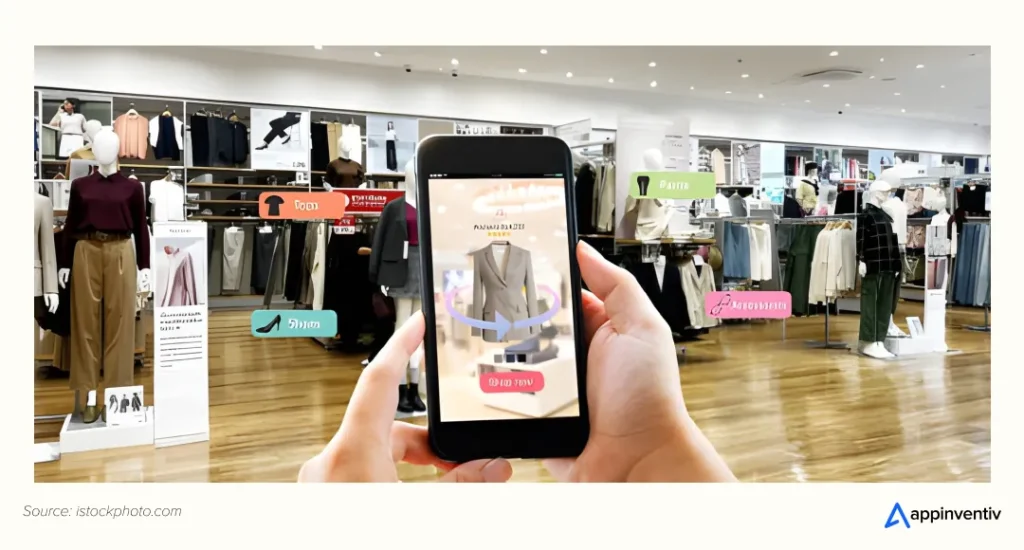
71% of consumers would shop more if AR try-on were available; returns drop 27% with virtual try-onThe returns problem in fashion and beauty is expensive — roughly 20–30% of online apparel orders are returned. AI-powered virtual try-on directly attacks this cost. By 2026, 91% of Gen Z shoppers express interest in AR shopping experiences, and retailers report conversion rate improvements of up to 94% from 3D and AR product visualization. The technology is no longer experimental; it’s live at scale with major beauty and fashion brands. The remaining barrier is production effort — creating 3D assets for large catalogs is still costly.
Social Commerce + AI on Roblox and TikTok
Roblox is the fastest-growing Gen Z commerce channel in 2026Social platforms have become primary shopping destinations, not just awareness channels. Roblox is now the fastest-growing Gen Z commerce channel by order volume growth — outpacing TikTok — according to research from Retail Technology Show 2026. AI is the connective tissue: recommendation engines that understand social context, conversational commerce embedded in social feeds, and AI-generated product experiences within gaming environments. Any brand with a Gen Z audience needs a position on this.
AI-Powered Merchandising That Reacts to Context
McKinsey: AI forecasting reduces supply chain errors by up to 50%AI-powered merchandising platforms now integrate hyper-local data — weather shifts, regional events, social media trends — to dynamically adjust product placements and promotions. A retailer in Manchester sees different front-page merchandising than one in Nice, not because a merchandiser manually configured it, but because the AI has read local signals and reweighted inventory visibility accordingly. This removes the “one-size-fits-all” storefront problem that has plagued national retailers for decades.
AEO — AI Engine Optimization Replaces Pure SEO
The question “does Google rank my product?” is being joined — and in some segments, replaced — by “does the AI recommend my product?” Brand visibility in an agent-mediated world depends on AI optimization: whether your product shows up when a shopping agent is evaluating options. This is driving a new discipline, sometimes called AEO (AI Engine Optimization), focused on product data completeness, structured markup, API accessibility, and prompt-optimized product descriptions. Where SEO was about keywords and links, AEO is about data structure and agent-readability.
Where Does Your Brand Show Up When AI Does the Shopping?
- Level 0 — Invisible: No schema markup, poor product data, no API exposure. Agents skip you.
- Level 1 — Findable: Schema markup present, basic product data complete. Agents can surface you, but won’t prioritize you.
- Level 2 — Competitive: Rich product attributes, real-time inventory via API, review aggregation structured. Agents include you in comparisons.
- Level 3 — Preferred: Agent-optimized product descriptions, high trust signals (reviews, return policy, delivery certainty), native checkout integration. Agents recommend you first.
Trends 16–20: The Operational Layer
This cluster tends to get less attention in trend pieces focused on the consumer experience. That’s a mistake — these operational shifts are where the P&L impact is often largest.
AI Demand Forecasting — Zip-Code-Level Precision
Walmart: 30% fewer stockouts; 30M fewer delivery miles annuallyWalmart’s AI-powered inventory system integrates historical sales data, weather patterns, macroeconomic indicators, and local demographics to predict demand at zip-code level. The system’s patent-pending “anomaly forgetting” capability excludes one-time events from forecasting models — preventing a single Black Friday from distorting future predictions. The result: 30% fewer stockouts across 4,700 stores while optimizing transportation routing. This is the kind of operational gain that moves margins by multiple percentage points.
Dynamic Pricing Moves from Airlines to All Retail
25% of major e-commerce platforms now use real-time AI pricingDynamic pricing — long the domain of airlines and hotels — is becoming standard in general retail. 25% of major e-commerce platforms are already using AI-powered dynamic pricing to adjust prices in real time based on demand signals, competitor pricing, inventory levels, and customer segments. The opportunity: 5–10% margin improvements through intelligent pricing, according to data from Dynamic Yield. The risk: consumer perception. Shoppers who discover they paid more than a neighbor for the same product at the same moment will not forget it. Price personalization requires careful guardrails around fairness and transparency.
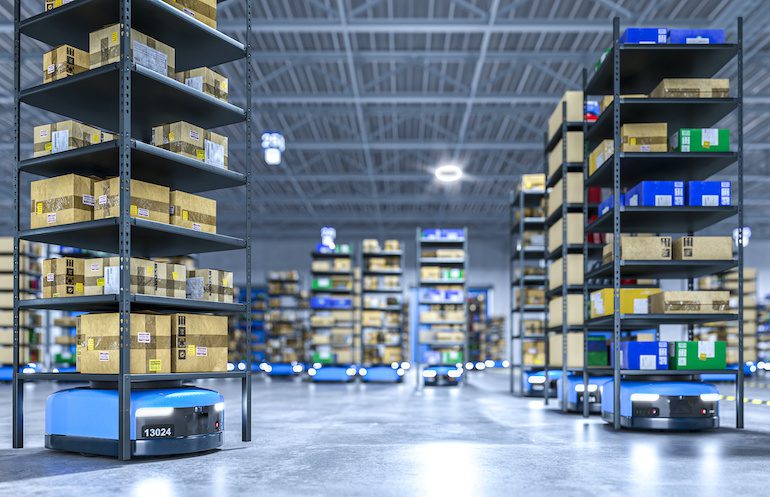
Autonomous Supply Chain Operations
NRF identified autonomous supply chains as one of 2025’s two breakthrough moments (alongside smart consumer agents). AI systems are now making multi-step logistics decisions autonomously: rerouting shipments around disruptions, adjusting safety stock levels in response to demand signals, and coordinating across suppliers without human intervention in the loop. The shift from “AI-assisted” to “AI-autonomous” in supply chain is well underway at major retailers — and the risk profile changes significantly when AI errors compound across a chain rather than a single decision point.
AI Fraud Detection in Agentic Transactions
78% of financial institutions expect fraud to spike from AI shopping agentsAs AI agents complete transactions autonomously, fraud detection faces a new challenge: distinguishing legitimate agent traffic from malicious agent traffic. 78% of financial institutions expect fraud to increase from AI shopping agents, and 2026 is seeing authentication frameworks begin to formalize. The implication for retailers: transaction logging must now capture agent identity, authorization context, and decision signals — not just payment credentials. Retailers investing in agent-aware security infrastructure are better positioned for both risk management and compliance.
AI Customer Service — Moving Beyond Chatbots
The first generation of AI customer service was chatbots with decision trees and keyword matching. The current generation uses large language models that understand context, handle complex returns and complaints, escalate appropriately, and maintain consistent brand voice across millions of simultaneous interactions. The operational case is clear; the brand risk is also clear — LLM-based customer service can fail in ways that scripted bots never could, including off-brand responses and confident misinformation about policy details.
Trends 21–25: The Next Frontier
These trends are real but earlier-stage. They’re worth tracking rather than prioritizing unless you’re a large enterprise with the resources to move early.
Physical Stores Becoming AI-Native Experience Centers
The stores that are winning in 2026 aren’t competing with e-commerce — they’re doing something e-commerce cannot. Brick-and-mortar is being redesigned as an AI-augmented experience layer: interactive AR displays, AI-assisted selling that uses real-time customer data, and “phygital” touchpoints where digital and physical merge. Pop-up retail is growing rapidly (projected from $95B in 2025 to $144B by 2032 globally) as brands use short-term immersive formats to create experiences worth the trip.
Invisible Checkout — Frictionless Payment
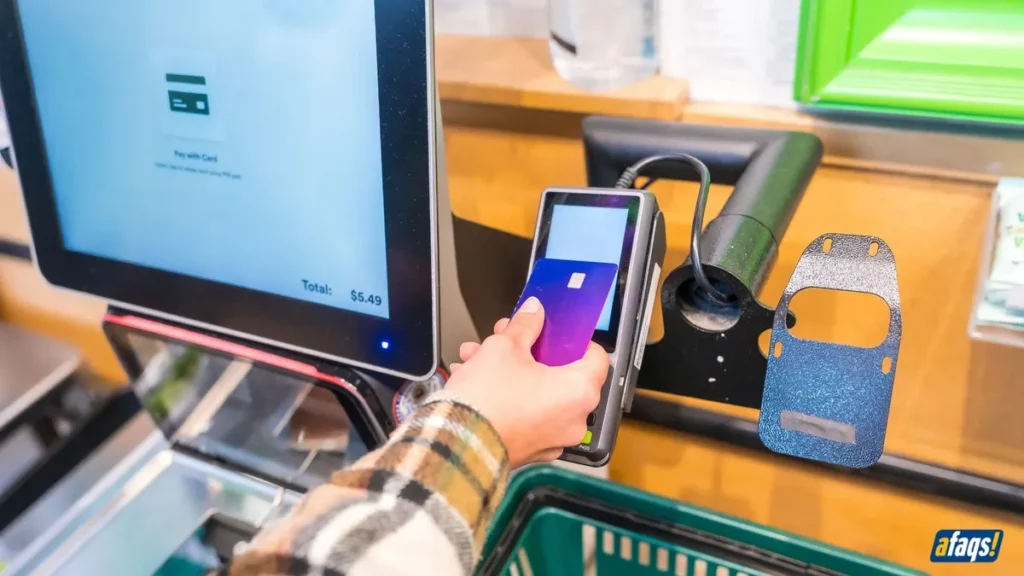
The next frontier of conversion optimization is removing checkout friction entirely. Walk-out technology (pioneered by Amazon Go), biometric payment, and pre-authorized agent wallets are converging on a future where “checkout” is simply confirmation of a transaction that already happened. The consumer benefit is obvious. The regulatory complexity — around authorization, data consent, and return rights — is equally significant, especially in the EU where consumer protection law is stringent.
AI-Powered Sustainability Verification
Sustainability claims are increasingly a conversion driver, particularly among under-35 shoppers. But greenwashing has eroded trust. AI systems that can verify and surface supply chain sustainability credentials in real time — integrating third-party certification data, carbon footprint calculations, and material sourcing records — are becoming a competitive differentiator for brands with genuine sustainability commitments. The risk: AI can also make verification seem present when it is not, amplifying greenwashing at scale if systems are not carefully audited.
Secondhand and Circular Commerce Powered by AI
Secondhand shopping continues to grow, and AI is making resale infrastructure viable at scale — automated grading of product condition, dynamic pricing for pre-owned items, matching buyers to sellers based on style preferences, and AI-generated product descriptions for one-of-a-kind items. NRF explicitly flags whether secondhand shopping will continue to thrive as one of 2026’s key unanswered questions, as the segment faces both growing demand and growing competition from AI-enabled resale platforms.
The EU AI Act Changes Everything for European Retail
The EU AI Act implementation in 2025–2026 is introducing compliance requirements that will significantly shape how AI shopping systems operate across Europe. High-risk AI applications — including some forms of personalization and automated decision-making — require transparency, human oversight mechanisms, and documentation. For retailers operating across borders, this creates a compliance bifurcation: systems designed for the US market may need meaningful rearchitecting for EU markets. This is not a distant concern — it’s an active compliance workstream for any retailer with European customers.
How This Actually Works Together
👉 In one sentence: the 25 trends form a system, not a list — and the system only delivers value when the data layer, the AI layer, and the experience layer are connected.
From Shopper Intent to Completed Transaction
- Shopper expresses intent (conversationally, via visual search, or through behavioral signals)
- AI interprets intent (shopping assistant or agent parses goal, constraints, preferences)
- Agent queries structured data (product APIs, real-time inventory, pricing feeds — machine-readable layer)
- Personalization engine applies context (user history, behavioral signals, real-time constraints like stock levels and margin)
- Recommendation surfaces (on the AI platform — ChatGPT, Gemini, retailer app, social feed)
- Agent executes purchase (within authorized parameters, via native checkout integration)
- Post-purchase AI activates (proactive delivery updates, AI-driven cross-sell, return prediction to flag likely returns preemptively)
- Data feeds back into demand forecasting and personalization models (closing the loop)
Integration types: Steps 1–3 are typically native integrations between AI platforms and retailer product feeds. Steps 4–5 are semi-automated, requiring both AI infrastructure and human-curated guardrails. Steps 6–8 are increasingly fully automated at scale, but most retailers are still in semi-automated mode.
Friction points to know: The biggest failure point is between steps 3 and 4 — product data that is incomplete or inconsistently structured causes agents to skip or misrepresent products. The second failure point is between steps 6 and 7: authorization and fraud detection infrastructure that wasn’t designed for autonomous transactions.
Which Trends Should Your Business Prioritize?
| Trend Cluster | Priority For | Skip / Defer If | Time Horizon |
|---|---|---|---|
| Agentic Commerce (1–5) | Mid-large retailers, multi-brand e-commerce, B2B procurement | Small DTC, single-channel, non-digital-native | Now–12 months |
| Hyper-Personalization (6–10) | Any retailer with sufficient first-party data and a CDP/CRM in place | Brands without unified customer data — fix the data first | Now–18 months |
| Visual Search & AR (11–12) | Fashion, beauty, home furnishings, lifestyle brands | Commodity products, B2B, low-visual categories | 6–18 months |
| AEO / Agent Optimization (15) | All digital retailers — this is foundational infrastructure | Nobody. Every retailer needs this. | Now |
| Operational AI (16–20) | Retailers with complex inventory or supply chain; enterprises | Small operators — ROI threshold is higher here | 6–24 months |
| Next Frontier (21–25) | Large enterprises with R&D budgets; EU-market operators (Trend 25 is urgent) | Most SMBs — monitor, don’t act yet | 12–36 months (except Trend 25) |
The 80% Solution Stack
If you can only implement a focused set of AI commerce capabilities this year, these deliver the highest return across the broadest range of business types:
| Layer | What to Build or Buy | Why It’s the 80% Answer |
|---|---|---|
| Data Foundation | Product data completeness + schema markup + real-time inventory API | Every AI trend depends on this. Without it, all other investments underperform. |
| Personalization Engine | Real-time recommendation AI + unified customer profile | Proven ROI across all verticals; directly lifts revenue and conversion. |
| Conversational Discovery | AI shopping assistant or chatbot with product catalog integration | Addresses the shift from keyword search; captures higher-intent shoppers. |
| Agent Readiness | Shopify/platform agent integrations + ChatGPT/Gemini merchant connectivity | Low-cost entry point into agentic commerce with measurable new-customer acquisition. |
| Operational Forecasting | AI-powered demand forecasting integrated with inventory management | Directly reduces stockouts and overstock costs — measurable P&L impact. |
Limitations & Honest Trade-offs
Most AI shopping trend pieces skip this section. We won’t.
Consumer trust in full AI autonomy is still developing. Surveys show that while 45% of consumers use AI for shopping, trust in fully autonomous AI transactions — where the AI spends your money without explicit confirmation — varies significantly by category and demographic. Everyday replenishment items are accepted; high-consideration purchases (electronics, furniture, fashion) still require human approval in most workflows.
Agentic commerce has a fraud surface that didn’t exist before. 78% of financial institutions expect fraud to spike from AI shopping agents. Agent identity verification and transaction authorization frameworks are still maturing. Retailers who move fast on agentic commerce without robust security architecture are accepting real exposure.
AI personalization without holdouts is often measuring selection bias, not treatment effect. A personalized email going to more engaged users will show higher click-through rates than batch emails — but that doesn’t prove the personalization caused the lift. Without proper holdout groups, many personalization programs are optimizing against a vanity metric.
The EU AI Act creates compliance divergence. Systems built for the US market — particularly around automated decision-making and profiling — may require significant rearchitecting to comply with EU requirements. This is not a future problem for European-market operators.
Generative AI’s ability to interpret human meaning and emotion remains limited. Retail leaders explicitly note this gap — AI can surface relevant products, but it cannot replicate the emotional resonance of great brand storytelling. The brands that win will combine AI efficiency with human-led creative and narrative.
FAQ
What’s the difference between agentic commerce and conversational commerce?
Conversational commerce involves chatting with an AI about products — it’s interactive, but you’re still making every decision and clicking every button. Agentic commerce gives the AI the authority and capability to take actions in the real world, including spending money, without requiring human approval for each step. You grant permissions, set budgets, define preferences, and the agent operates within those constraints autonomously. It’s the difference between a shopping assistant and a shopping proxy.
Is AEO (AI Engine Optimization) replacing SEO?
Not replacing — extending. Traditional SEO remains relevant for direct search traffic. AEO addresses a new and growing traffic source: queries routed through AI platforms (ChatGPT, Gemini, Perplexity) rather than search engines. The tactics differ: AEO focuses on product data completeness, structured markup, API accessibility, and how well your product information answers intent-based questions. Both disciplines are now necessary for full-funnel discoverability.
How should small retailers approach these trends without enterprise-scale budgets?
Start with the data foundation — schema markup and product data completeness are low-cost and high-impact. Connect to Shopify’s native AI shopping integrations, which handle much of the agentic commerce infrastructure without custom development. Use off-the-shelf AI recommendation tools rather than building custom. Prioritize hyper-personalization via email (measurable ROI with accessible tools) before investing in more complex real-time personalization infrastructure. The trap to avoid: chasing the newest trend before the foundational work is done.
How does the EU AI Act affect AI shopping tools specifically?
The EU AI Act classifies certain AI applications in retail as high-risk, including systems that make decisions affecting consumers’ access to goods and services, and those that conduct profiling. High-risk systems require documentation, human oversight mechanisms, transparency to consumers, and conformity assessments. Dynamic pricing systems, credit scoring for buy-now-pay-later, and certain forms of automated personalization are in scope. The practical effect: EU-facing AI commerce systems need legal review, not just engineering review.
What is the biggest mistake retailers make when adopting AI for commerce?
Investing in AI experience layers before fixing the data foundation. Personalization engines can only be as good as the customer data they run on. Agentic commerce can only surface your products if they’re structured and machine-readable. In many workflows, retailers spend heavily on AI recommendation tools and then wonder why performance is mediocre — often because product data is incomplete, customer profiles are fragmented across systems, or real-time inventory data isn’t exposed via API. Fix the foundation first.
Final Thoughts — The Uncomfortable Truth
Here is what most retail AI coverage won’t tell you: the brands most threatened by these 25 trends are not the ones who are moving too slowly on AI. They’re the ones who are moving fast in the wrong direction.
Adopting agentic commerce without machine-readable product data means investing in a pipeline that can’t deliver your inventory. Building personalization infrastructure on fragmented customer data means optimizing a broken signal. Integrating with AI shopping platforms without a brand-controlled layer means ceding your customer relationship to a platform that has no loyalty to your brand.
The retailers who will win in the next three years are not necessarily the ones who adopt the most AI. They’re the ones who build the right foundation — structured data, unified customer identity, coherent omnichannel logic — and then layer AI capabilities on top of that foundation in order of demonstrable ROI.
There is also a harder question that the data cannot fully answer yet: what happens to brand when the buyer is an agent? Agents optimize for efficiency, price, and specifications. They don’t feel the pull of clever packaging, compelling brand story, or editorial photography. In a world where AI agents complete an increasing share of purchases, the premium that brand equity commands may face structural pressure it has never faced before.
That’s not an argument against any of these trends. It’s an argument for investing in the things that AI cannot replicate: genuine product quality, authentic brand story, and customer experiences that create real loyalty rather than algorithmic stickiness.
The brands that figure that out will use AI to scale their strengths. The ones that don’t will use AI to automate their mediocrity — faster, and at lower cost per click, until a competitor with a better product and a better story takes their customers one agent recommendation at a time.
Primary Sources
- Salesforce — Cyber Week 2025 AI Commerce Data (AI-driven interactions influencing ~$67B in global online sales)
- Commercetools — Agentic Commerce Stats 2026: Enterprise Guide
- NRF — 10 Trends and Predictions for Retail in 2026
- Stord — State of AI in E-Commerce 2026
- ContactPigeon — Top Retail Predictions 2026
Secondary Sources
- McKinsey — AI in Retail: Generative AI value estimate ($400–660B annually)
- MetaRouter — Agentic Commerce Trends and Statistics 2026
- Insider One — AI in Retail: 10 Trends Reshaping Shopping in 2026
- ArticSledge — AI Retail 2026 (Walmart case study data)
- Gartner — 40% of enterprise applications will embed AI agents by 2026