
AI in Politics: 7 Disadvantages Reshaping Democracy in 2026
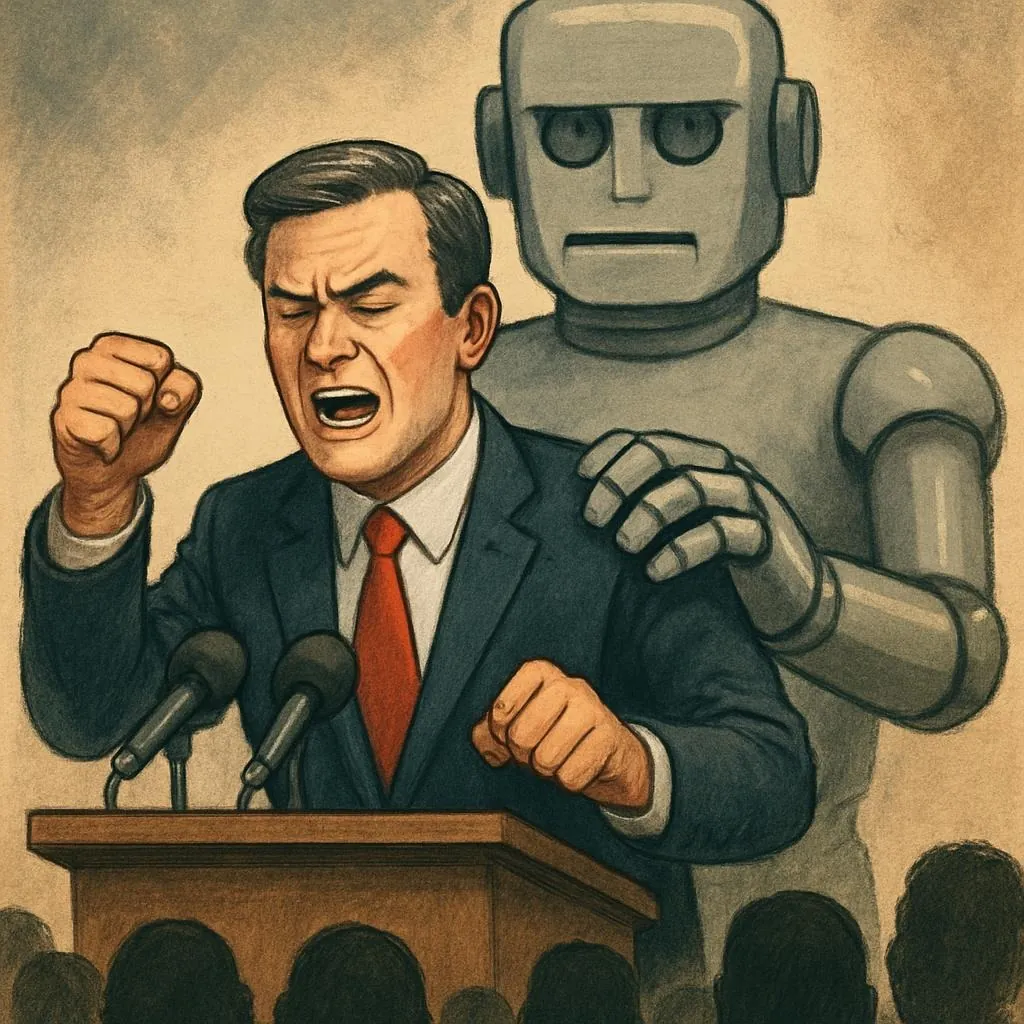
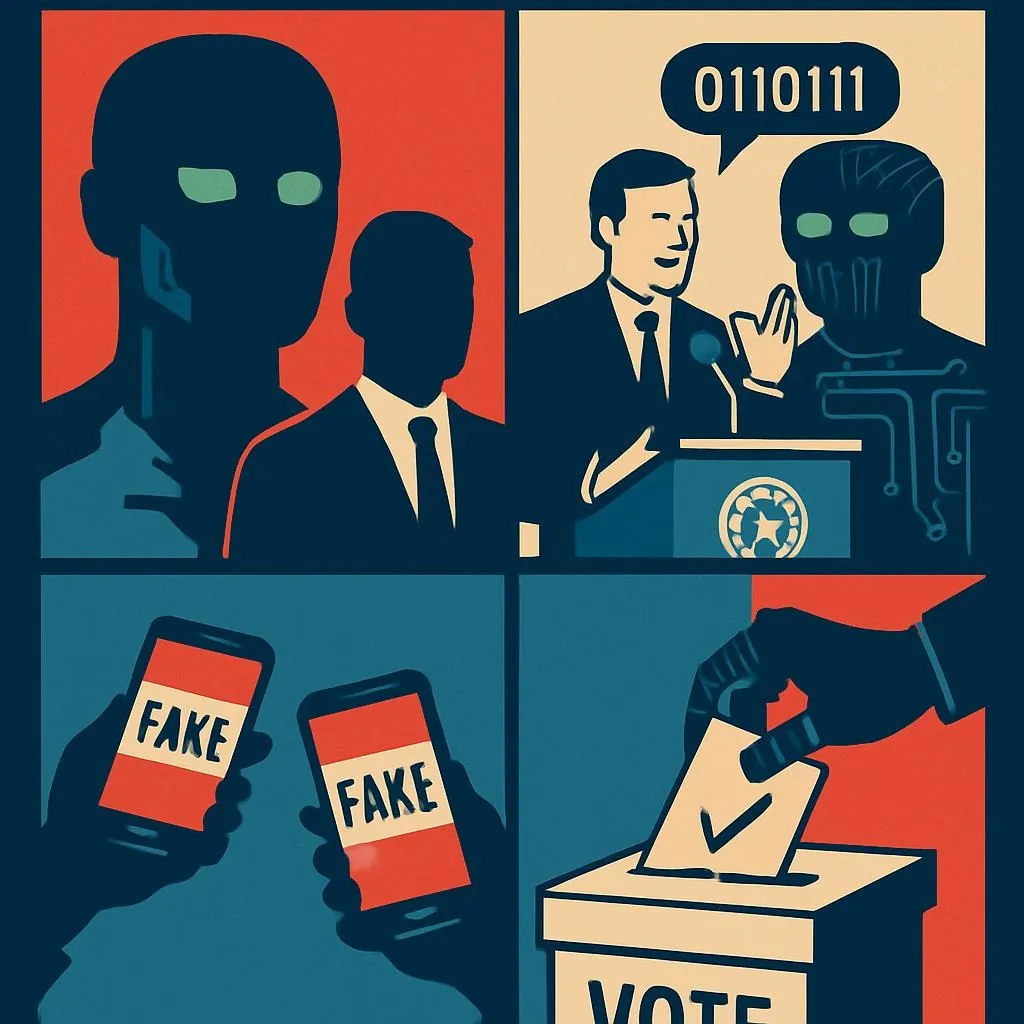
Deepfake attack ads are now standard campaign strategy. Algorithmic bias is quietly skewing whose voice gets heard. And the voters? Most can’t tell what’s real anymore.
Here’s the uncomfortable truth nobody in the tech-optimism camp wants to say out loud: AI hasn’t just entered politics. It’s changed the game — and not cleanly in democracy’s favor.
We were warned, of course. For years, researchers flagged the risks of synthetic media, biased algorithms, and surveillance-grade voter profiling. What we underestimated was how fast “theoretical threat” would become “Tuesday campaign tactic.” By the 2026 U.S. midterm cycle, deepfake attack ads had become official campaign strategy — deployed by major party committees, defended as “satire,” and barely regulated at the federal level.
This isn’t a future-tense problem. It’s now. So let’s be precise about what’s actually happening, why it matters, and — critically — what can be done about it.
- Deepfakes: From Novelty to Normalized Attack Ad
- Algorithmic Bias: Whose Voice Gets Amplified?
- Privacy Erosion and Voter Surveillance
- Micro-Targeting and the Manipulation Machine
- AI-Driven Polarization: The Echo Chamber Gets Louder
- Accountability Collapse: The “Liar’s Dividend”
- AI as a Tool of Digital Authoritarianism
01 Deepfakes: From Novelty to Normalized Attack Ad Critical
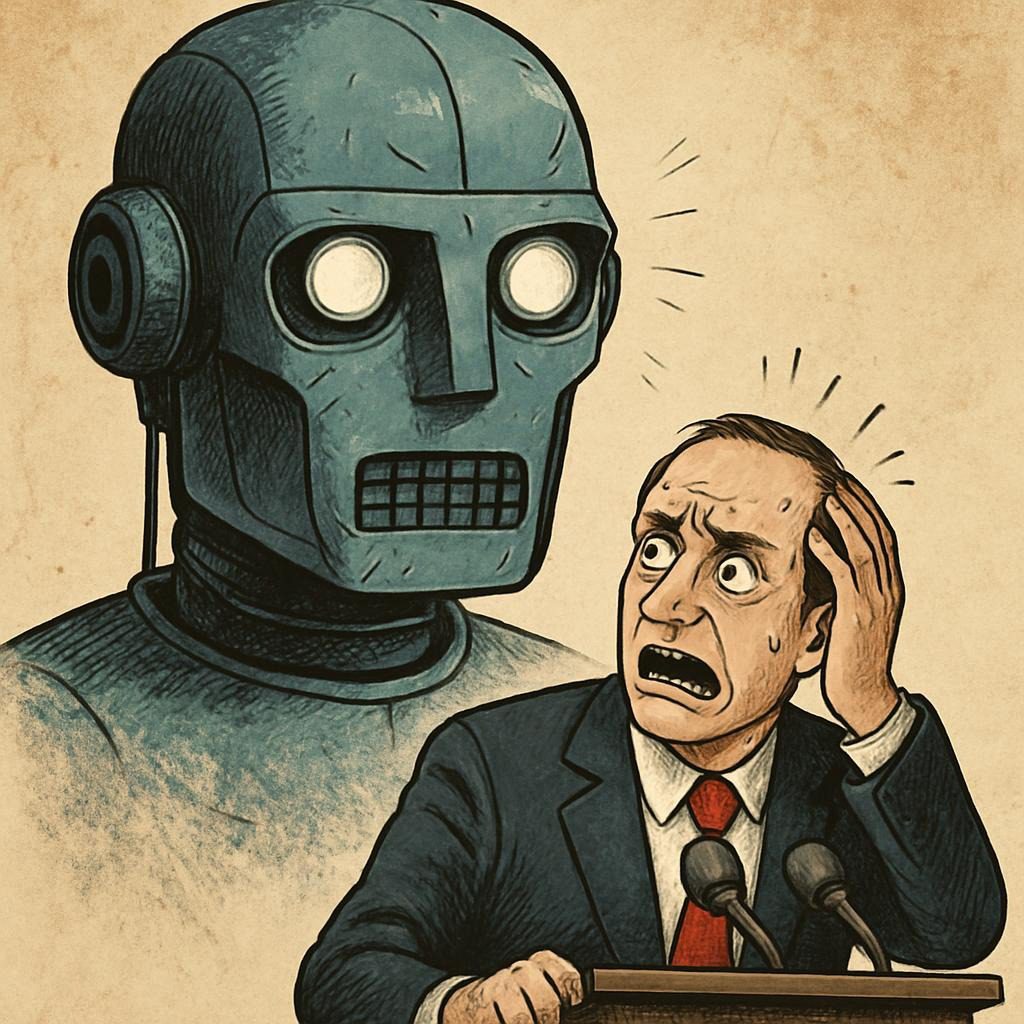
Let me describe something that actually happened — not a hypothetical. In the 2026 midterm cycle, the National Republican Senatorial Committee released a video of Texas Democratic candidate James Talarico appearing to say, on camera, “Radicalised white men are the greatest domestic terrorist threat in our country.” The words were real — pulled from Talarico’s social media posts. The video was fabricated. The label “AI-generated” appeared in small font in the corner.
The campaign’s defense? Satire. “The future of digital campaigning.”
“The types of damage that we can do to the rigor and credibility of elections and democratic systems — the ability to misinform people about candidates or social issues — very much risks being supercharged.” — Daniel Schiff, Purdue University professor, Reuters 2026
That case wasn’t isolated. At least five confirmed deepfake incidents appeared across the 2026 midterms — Texas, Georgia, Massachusetts — deployed by official campaign organizations. In Georgia, Representative Mike Collins released a deepfake of Senator Jon Ossoff depicting him saying he voted to keep the government shut down. Ossoff never said it. Collins called it “the future of digital campaigning.”
What’s particularly insidious is the mechanism of influence. Survey data from the 2026 cycle found that nearly 50% of voters said deepfakes had some influence on their election decisions — even though most claim to distrust the technology. The damage isn’t that people believe the fakes are real. It’s subtler. A synthetic video plants a seed of doubt. It makes a real quote feel more damaging because you’ve now seen the candidate “say it” in full emotional color. Even when the factual content is already public, the invented staging and fabricated expressions manipulate perception.
As deepfakes proliferate, a perverse second-order effect emerges: real damaging footage becomes easier to dismiss as fake. Politicians can credibly deny authentic evidence simply by seeding doubt. This is sometimes called the “liar’s dividend” — and it may be more dangerous than the fakes themselves.
There is currently no federal law banning political deepfakes in the United States. Twenty-eight states have passed legislation, but the overwhelming majority focus on disclosure requirements, not prohibition. You can fabricate a politician’s face and voice — you just have to print “AI-generated” somewhere on screen, small enough to miss.
The EU’s AI Act, enforced from 2026, includes stricter transparency requirements for synthetic political content. But enforcement across 27 member states against fast-moving campaign operations is genuinely hard. Ahead of elections in Hungary, Brazil, and the UK, the Centre for Emerging Technology and Security warns that 2026 will see further AI-enabled voter manipulation — and that existing safeguards simply aren’t ready.
02 Algorithmic Bias: Whose Voice Gets Amplified? High
AI bias in politics is harder to see than a deepfake video. It works quietly — in the training data, in the recommendation engines, in the targeting algorithms that decide which voters receive which messages. That invisibility is exactly what makes it dangerous.
The core problem is straightforward: AI systems learn from historical data, and historical political data is saturated with existing inequalities. Feed a model decades of voting patterns, campaign targeting decisions, and media coverage — and it will reproduce those patterns at scale, often in ways that exclude or disadvantage minority communities, rural populations, and non-English speakers.
Research published in the peer-reviewed literature confirms that AI language models are far from neutral. They inherit biases from their training data and from the design choices of their creators, and these biases can subtly shape political communication — which candidates’ messaging gets amplified, which voters’ concerns are categorized as “high priority,” and whose neighborhoods get canvassed.
Then there’s the chatbot problem. Studies consistently show that AI chatbots, after a few interactions, tend to shift political opinions. The direction of the shift depends on the model’s training — which means the choice of which AI assistant a campaign uses, or which one a voter happens to consult, is itself a form of political influence. This isn’t hypothetical manipulation. It’s a real, documented mechanism running quietly in the background of every digital campaign.
The AIF360 toolkit from IBM and Google’s What-If Tool both provide open-source frameworks for auditing models for demographic bias. For campaigns using AI targeting, running demographic parity checks on ad delivery data before launch takes roughly an afternoon and can surface systematic exclusions that are otherwise invisible.
The election implications extend beyond messaging. AI tools are increasingly used to determine resource allocation in campaigns — where to knock doors, which districts to prioritize, how to rank voter outreach lists. Biased inputs produce biased outputs. Communities that have historically been underrepresented in political data get deprioritized by models trained on that same underrepresentation. The bias self-reinforces.
03 Privacy Erosion and Voter Surveillance High
Political campaigns have always collected voter data. What’s changed is the scale, the granularity, and the AI’s ability to turn fragmented data points into eerily accurate behavioral profiles. Your location history, your streaming habits, your online search patterns, your social media engagement — AI can synthesize these into a psychological model of how you’re likely to vote and what messages will move you.
This isn’t theoretical. As the Yale Journal of Law & Technology noted, the principal function of many consumer platforms is to capture personal information, create detailed behavioral profiles, and sell access to those profiles — including to political actors. Privacy, autonomy, and the ability to form political opinions free from commercial surveillance are among the first casualties.
The EU’s General Data Protection Regulation and the AI Act both impose meaningful constraints on this kind of profiling within Europe. The United States has no equivalent federal framework. In the 2026 midterm cycle, campaigns operated with essentially no federal guardrails on the use of AI-driven voter profiling — meaning that a campaign can purchase data-enriched voter files, run them through machine learning models to identify persuasion targets, and deliver psychologically calibrated messages with no meaningful oversight.
“Disinformation campaigns depend heavily on accessing enormous amounts of personal data to target individuals, create personalized messages to manipulate viewers’ beliefs, and track them.” — Wilson Center, 2024
There’s also the cybersecurity dimension. AI makes phishing more convincing, social engineering easier, and voter registration database attacks more targeted. The UN Secretary-General’s address to the Security Council highlighted AI’s capacity for cyberattacks on democratic infrastructure as a direct threat to election integrity — not just a theoretical risk but an active and growing one.
04 Micro-Targeting and the Manipulation Machine High
Political micro-targeting long predates AI — Barack Obama’s 2012 campaign was doing sophisticated data-driven targeting over a decade ago. What AI changes is the cost, the speed, and the personalization depth. What used to require a team of data scientists and a significant budget can now be done by a small campaign with an API key and a credit card.
The result is that each voter increasingly receives a customized political reality — messages calibrated to their specific fears, values, and vulnerabilities. Research on Ecuador’s 2025 election found that AI creates a “false sense of plurality” — voters feel they’re encountering diverse viewpoints when they’re actually being served algorithmically tailored content designed to reinforce existing beliefs and nudge behavior.
The specific worry with AI-powered targeting isn’t just that it’s persuasive. It’s that it operates in the dark — in private messages, in personalized ad feeds, in chatbot conversations — without the transparency of broadcast advertising. A TV ad is public; everyone sees the same message and can evaluate it. A micro-targeted message exists only for one person, adjusted for their psychological profile, with no external accountability.
| Targeting Era | Method | Scale | Transparency | Accountability |
|---|---|---|---|---|
| Pre-2012 | Demographic segments, broadcast | Low | High (public ads) | Strong (public record) |
| 2012–2020 | Data-driven, social media | Medium | Medium | Moderate |
| 2024–Present | AI-generated, hyper-personalized | Unlimited | Very low | Near zero (federally) |
The fairness concern is real too. In India’s 2024 general elections, AI-generated deepfakes of celebrities criticizing the Prime Minister and endorsing opposition parties went viral on WhatsApp — a platform used by hundreds of millions of voters. The targeting was demographic, the reach was massive, and the content was fabricated. That’s the current state of play.
05 AI-Driven Polarization: The Echo Chamber Gets Louder Moderate–High
AI recommendation systems don’t set out to polarize people. They optimize for engagement — and unfortunately, outrage and tribalism drive more engagement than nuance and consensus. The result is that AI-curated content feeds tend to push users toward more extreme versions of their existing views.
The Journal of Democracy’s analysis is direct on this: as generative AI floods the media landscape with synthetic content, voters who don’t tune out entirely will increasingly rely on partisan heuristics — because they can’t trust individual pieces of information. The erosion of shared factual reality strengthens polarization. People retreat to tribal identities when objective verification becomes impossible.
What’s new in 2026 is the intersection of AI content generation and AI recommendation — a feedback loop where AI creates content tailored to polarizing emotions, AI recommendation surfaces that content to receptive audiences, and the resulting engagement data trains the next round of content generation. It’s a machine that runs largely on autopilot, and it has been running continuously through every recent election cycle.
“AI is not a stand-alone disruptor but rather a powerful new layer in existing influence operations, with the potential to outpace rules and regulations if not managed appropriately.” — Centre for International Governance Innovation, 2025
The gender dimension deserves specific mention. Carnegie Endowment research found that female politicians face a substantially greater threat from deepfakes than their male counterparts — because AI-generated sexualized and defamatory content is disproportionately directed at women in politics. This isn’t just a fairness issue. It’s a structural distortion of who participates in democratic governance.
06 Accountability Collapse: When Reality Becomes Optional Critical
This one is underrated in most AI-and-politics discussions, and it may be the most profound long-term threat.
As AI-generated content becomes indistinguishable from real footage, a second-order effect kicks in: authentic evidence loses its power. A genuine video of a politician saying something damaging can now be plausibly dismissed as AI-generated. The politician simply says “that’s a deepfake” — and in an environment saturated with actual deepfakes, a meaningful percentage of the audience will believe them.
The Brennan Center calls this the “liar’s dividend.” The consequences go beyond individual incidents — they create a landscape where truth itself becomes contested. Democratic accountability depends on the ability to hold public figures responsible for their actual statements and actions. If any piece of damaging evidence can be credibly labeled as synthetic, that mechanism breaks down.
Detection technology exists, but it’s not accessible to ordinary voters. The Talarico ad had one detectable flaw: a subtle audio sync issue that an expert had to study closely to find. The next generation of AI video will not have that flaw. Consumer-grade video generation has improved at a pace that genuinely surprised even researchers tracking the field — this wasn’t a 2025 problem inherited by 2026, it became a 2026 problem essentially overnight.
What Content Authentication Technology Actually Looks Like in 2026
The most promising near-term solution is content provenance — cryptographic standards that embed authentication data into media at the point of creation. The Coalition for Content Provenance and Authenticity (C2PA) standard, now implemented in some major camera and software vendors, creates a tamper-evident chain of custody for digital media. When a video is shot on a compliant camera and published through a compliant platform, viewers can verify its origin.
The problem is adoption. Most political videos are not shot on C2PA-compliant cameras, published through compliant platforms, or viewed through interfaces that surface provenance data. The Centre for Emerging Technology and Security recommends governments experiment with Content Credentials tools — but “experiment” is doing a lot of work in that sentence. We’re years away from infrastructure that could actually protect a contested election.
07 AI as a Tool of Digital Authoritarianism Critical
This last point is the one that puts everything else in global context. In democratic countries, the primary concern is that AI degrades the quality of political discourse. In authoritarian contexts, the concern is more acute: AI is actively being used to entrench power and silence dissent.
Carnegie Endowment’s research identifies a new phase of “digital authoritarianism” — domestically reinforcing autocracy and surveillance, externally enabling foreign interference operations. Unlike traditional tools of repression — overt censorship, propaganda, physical coercion — generative AI allows for sophisticated manipulation of public perception at scale, with plausible deniability and low cost.
Russia’s use of deepfakes against Putin’s political opponents, and the early-invasion deepfake of Zelensky supposedly urging Ukrainian troops to surrender, aren’t edge cases. They’re proof of concept, deployed at scale. The Wilson Center notes that even a poorly made deepfake published at peak information-war intensity can add uncertainty and play into the hands of those trying to destabilize civil society.
Meanwhile, tech companies and social media platforms have been cutting back their moderation departments — creating, as the Wilson Center puts it, a one-two punch: AI makes disinformation cheaper and more convincing while the platforms responsible for catching it have reduced capacity to do so.
In Canada’s 2025 federal election, an AI deepfake of Prime Minister Mark Carney reached more than one million views on social media by June — released directly before the election. Federal authorities warned against AI interference, predominantly singling out hostile foreign actors. The ruling party experienced an unexpected support boost in final weeks contrary to earlier polling. The causal link can’t be established definitively — but the timing and mechanism were textbook AI interference playbook. Source: Centre for International Governance Innovation, 2025.
A Realistic Path Forward
Let’s be honest: there’s no clean fix here. The people proposing blockchain-based provenance systems and real-time deepfake detectors are right that these tools matter — but they’re also proposing technical solutions to what is substantially a political and cultural problem.
Technical mitigations — content authentication standards, watermarking, detection APIs like Reality Defender — are necessary but not sufficient. What they buy is time and friction. They make deception marginally harder and give fact-checkers marginally more to work with. That’s genuinely valuable. But they won’t stop a well-resourced campaign from deploying AI-generated attack content, because no disclosure requirement makes a deepfake less emotionally compelling.
The regulatory picture is mixed. The EU AI Act’s enforcement of transparency requirements for synthetic political content is the most serious governance framework currently in force. In the United States, the regulatory gap is stark: 28 states have legislation focused primarily on disclosure, and there’s no federal prohibition on political deepfakes. Researchers at CIGI are clear that AI is not a stand-alone disruptor — it layers onto existing influence operations, amplifies existing inequalities, and outpaces regulation when governance doesn’t keep up.
The most underrated intervention is digital literacy. Not just “can you spot a deepfake” literacy — but a more fundamental shift in how citizens relate to political media. The era of taking video evidence at face value is over. That’s genuinely unsettling. But acknowledging it is the first step toward a more resilient information environment.
The fundamental question isn’t whether AI will continue to be used in politics. It will. The question is whether democratic institutions can adapt fast enough to preserve meaningful accountability, genuine voter agency, and the basic epistemic conditions that democracy requires — a shared enough reality that people can argue about what to do rather than whether anything they see is real.
Right now, the gap between the technology’s capabilities and the governance response is growing. That’s the actual crisis.
AI deepfake robocalls impersonate Biden urging New Hampshire Democrats not to vote. Consultant fined $6M by FCC.
AI deepfakes deployed in India, Brazil, Indonesia, Turkey, Argentina. Russia uses deepfakes to target opposition figures.
TAKE IT DOWN Act signed — criminalizes synthetic intimate imagery. Does not address political deepfakes.
AI deepfakes deployed in Romanian, Canadian, Australian elections. Deepfake of PM Carney reaches 1M+ views in Canada.
Political deepfakes established as official campaign strategy in U.S. midterms. 50% of voters report being influenced by them. No federal prohibition exists.
The Bottom Line
AI in politics isn’t an emerging threat. It’s a present reality. The 2026 midterm cycle demonstrated, without ambiguity, that AI-generated synthetic media has moved from adversarial interference into routine campaign operations. The mechanisms of harm — deepfakes, algorithmic bias, privacy erosion, micro-targeting, polarization feedback loops, accountability collapse — are no longer theoretical.
The honest assessment: democratic systems can probably absorb the current level of AI disruption. What they likely cannot absorb is the trajectory — because the technology improves faster than governance does, and because the political incentives to use synthetic media aggressively are overwhelming the incentives to restrain it.
The question that keeps serious researchers up at night isn’t “will AI be used to manipulate the next election?” We know the answer to that. It’s: at what point does the epistemic environment become so degraded that democratic accountability simply stops functioning? We don’t know where that line is. And we’re moving toward it.
Key Sources & Further Reading
- AI Deepfakes Are Official Campaign Strategy — Robo Rhythms, April 2026
- Poll: Majority of Voters Say Risks of AI Outweigh Benefits — NBC News, March 2026
- From Deepfake Scams to Poisoned Chatbots — Centre for Emerging Technology and Security, 2025
- Gauging the AI Threat to Free and Fair Elections — Brennan Center for Justice, 2025
- Can Democracy Survive the Disruptive Power of AI? — Carnegie Endowment, 2024
- Then and Now: AI Electoral Interference in 2025 — CIGI, 2025
- How AI Threatens Democracy — Journal of Democracy, 2025
- AI Poses Risks to Both Authoritarian and Democratic Politics — Wilson Center
- State Legislation on Deepfakes in Elections — Public Citizen
- AI Threats to Elections: A Blockchain-Based Deepfake Verification Framework — MDPI, 2024