
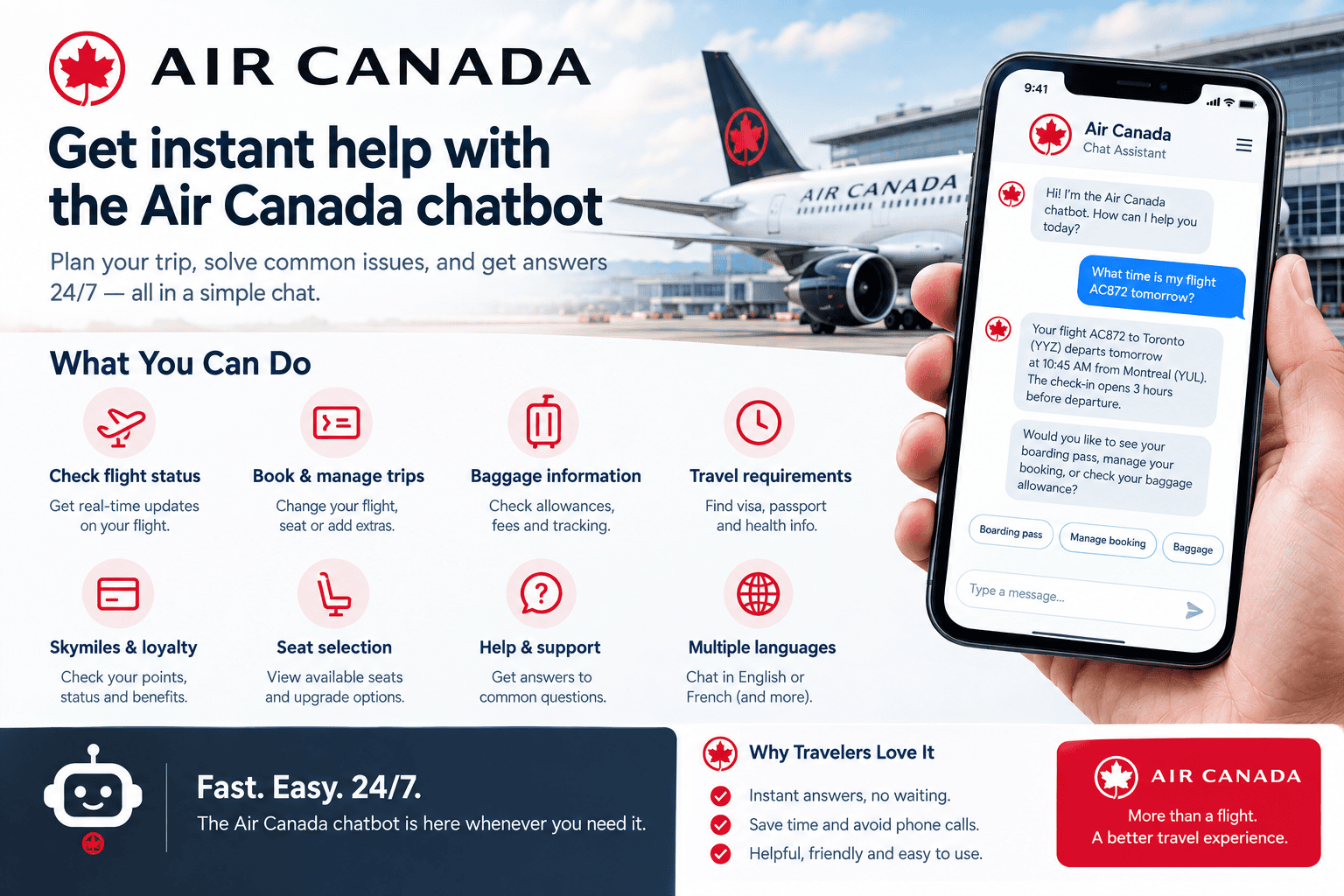
Moffatt v. Air Canada: What the chatbot ruling actually decided
On 11 November 2022, Jake Moffatt’s grandmother died, and Moffatt went to Air Canada’s website to find a last-minute flight from Vancouver to Toronto. A chatbot answered a question about bereavement fares. That answer turned out to be wrong, and it ended with a British Columbia tribunal ordering a national airline to pay C$812.02.
The amount is small. The case is not, and it is also routinely described inaccurately. This is the version that sticks to what the decision and the reporting around it support.
Short answer: In Moffatt v. Air Canada, 2024 BCCRT 149 (14 February 2024), the British Columbia Civil Resolution Tribunal held Air Canada liable for negligent misrepresentation after its website chatbot gave incorrect advice about retroactive bereavement-fare refunds. The airline owed C$812.02 in total. The tribunal rejected the argument that the chatbot was a separate legal entity and held that Air Canada was responsible for everything on its website, whether it came from a static page or a chatbot. It is a small-claims tribunal decision and does not bind courts elsewhere.
What happened, in order
| Date | Event |
|---|---|
| 11 Nov 2022 | Moffatt’s grandmother dies. While researching flights, Moffatt asks Air Canada’s website chatbot about bereavement fares. The chatbot says the fare can be bought at full price and a partial refund claimed within 90 days of the ticket being issued. It also links to the airline’s bereavement policy page, which says the opposite. A phone conversation with an Air Canada representative the same day reportedly put the discounted fare at about C$380 per flight. |
| 17 Nov 2022 | After travelling, Moffatt applies for the bereavement refund. |
| Dec 2022 to Feb 2023 | Months of correspondence. Air Canada refuses. |
| 8 Feb 2023 | An Air Canada representative admits in writing that the chatbot used “misleading words”, points to the linked policy page, and says the issue has been noted so the chatbot can be updated. No refund follows. |
| 14 Feb 2024 | Tribunal Member Christopher Rivers issues the decision in file SC-2023-005609. |
Two details in this timeline are easy to miss. The chatbot’s own message contained a hyperlink to the correct policy, so the contradiction sat inside a single answer. And Moffatt had a screenshot of the conversation, which meant Air Canada could not dispute what the chatbot had said.
The three defenses, and why each failed
Air Canada’s defense was not that the chatbot had been right. It made three arguments, and the tribunal rejected all of them.
1. “The chatbot is a separate entity.” Air Canada argued, in effect, that it could not be held liable for information supplied by one of its agents, servants or representatives, a category the airline said included the chatbot. The tribunal read this as treating the chatbot as a separate legal entity responsible for its own actions and called it “a remarkable submission.” Its reasoning was simple: a chatbot has an interactive component, but it is still part of the website, and the airline is responsible for all the information on its website. It makes no difference whether that information comes from a static page or a chatbot.
2. “The right answer was on another page.” The chatbot had linked to the bereavement policy page, and Air Canada said Moffatt should have read it. The tribunal was unmoved. It noted that Air Canada never explained why the “Bereavement travel” page should be considered more trustworthy than its chatbot, or why a customer should have to cross-check one part of the website against another.
3. “Our tariff limits liability.” Air Canada pointed to contractual terms in its Domestic Tariff. It never put the relevant part of the tariff in front of the tribunal, so the argument could not be considered. Legal commentary notes the tribunal treated Air Canada as a sophisticated litigant that had been told to submit all relevant evidence. The decision also records that Air Canada was represented by an employee.
That third point matters for how much weight the case deserves, and we come back to it below.
The legal test the tribunal applied
The tribunal treated Moffatt’s claim as negligent misrepresentation. To succeed, Moffatt had to show that Air Canada owed a duty of care, that its representation was untrue, inaccurate or misleading, that Air Canada made it negligently, that Moffatt reasonably relied on it, and that the reliance caused damage.
Each step went Moffatt’s way:
- Duty of care. As a service provider offering information through its website, Air Canada owed one.
- Inaccurate and negligent. The chatbot’s statement contradicted Air Canada’s own policy, and the tribunal found that Air Canada “did not take reasonable care to ensure its chatbot was accurate.”
- Reasonable reliance and damage. The tribunal accepted Moffatt’s evidence that they would not have flown at the last minute had they known the full fare would stand.
The money
| Component | Amount (C$) |
|---|---|
| Damages (difference between the fare paid and the bereavement fare) | 650.88 |
| Pre-judgment interest | 36.14 |
| Tribunal fees | 125.00 |
| Total | 812.02 |
Moffatt had claimed roughly C$880, so the tribunal awarded less than was sought. All figures are Canadian dollars. Secondary sources put the total fare Moffatt paid for the two flights at about C$1,630.
What kind of decision this is
Most coverage calls Moffatt a precedent. It is more accurate to call it an influential data point.
- It is a small-claims tribunal. The BC Civil Resolution Tribunal is an online administrative body that handles small claims. Its decisions do not bind courts or tribunals elsewhere, and legal commentators describe the analysis of the chatbot issue as relatively light.
- It applies British Columbia law. It has no formal force in other provinces, in the United States or in Europe.
- The record was thin. According to a McCarthy Tétrault analysis, Air Canada provided no information about the nature of its chatbot. The tribunal therefore ruled without knowing how the system was built, what it was trained on, or what controls surrounded it.
- The defense was weak on procedure. The missing tariff and the employee representative suggest the outcome may have been shaped as much by what Air Canada failed to present as by the merits of any chatbot-specific rule.
None of that makes the reasoning wrong. The principle that a company cannot disown its own customer-facing tool is the part most often cited outside Canada. It simply means the case shows how one adjudicator reasoned, not what the law is everywhere.
What the ruling does not say
Four claims circulate about this case that the decision does not support.
- That it was a “hallucination” ruling. The tribunal held that the chatbot’s statement was inaccurate and that Air Canada had been negligent. It made no finding about the underlying technology, and published accounts disagree on how the chatbot worked. Some describe it as generative; the tribunal itself had little information. Calling it a hallucination case is an interpretation, not a holding.
- That Air Canada was ordered to “honour the policy.” Some secondary coverage says this. The decision awarded damages for negligent misrepresentation; it did not order the airline to adopt a policy.
- That Air Canada pulled the chatbot because of the ruling. The chatbot appeared to have been removed from the site within days of the decision, and Air Canada never confirmed why. The timing is documented; the cause is not.
- That Air Canada paid and shut the bot down “for review.” Some guides state this as fact. Neither part is backed by the decision or by primary reporting.
No published reporting confirms whether Air Canada appealed. Treat that as unverified rather than assuming either way.
The decision also leaves open whether a prominent disclaimer on the chatbot would have changed the outcome. Nothing in the decision or the commentary shows a disclaimer-based defense being tested here.
Where the other famous chatbot incidents fit
Moffatt is often grouped with other chatbot embarrassments. Those are different in kind: none of them produced a liability ruling in the cases documented to date.
| Incident | What happened | Reported outcome |
|---|---|---|
| Chevrolet of Watsonville, Dec 2023 | A user prompted a dealership chatbot into “agreeing” to sell a 2024 Chevy Tahoe for $1. | Business Insider reported the agreement was not legally binding; the chatbot’s supplier shut the bot down on that dealer’s site. |
| DPD, Jan 2024 | A customer got the parcel firm’s chatbot to swear and write a poem calling DPD the worst delivery firm in the world. | A DPD spokesperson attributed it to an error after a system update, and the bot was disabled. No lawsuit. |
| NYC “MyCity” chatbot, Mar 2024 | An investigation by The Markup found the city’s small-business chatbot giving advice that conflicted with city law. | No lawsuit reported. |
| Cursor support bot, Apr 2025 | The support bot invented a single-device subscription policy. | Cursor’s co-founder publicly said the response was incorrect and that no such policy existed. |
The distinction is useful. Several of these are brand-damage events driven by user manipulation. Moffatt is the one where a customer relied on a plain, unmanipulated answer and lost money, which is why it is the one with a damages order attached.
What this means if you run a customer-facing bot
The following points are analysis drawn from the decision and legal commentary, not rules the tribunal laid down.
- Treat bot output as published content. The tribunal drew no line between a static page and a chatbot reply. Whatever your bot says about price, refunds or eligibility, assume you will be held to it.
- Do not count on the “correct page” to save you. Linking to the real policy did not help Air Canada. If the answer and the source disagree, the customer may be entitled to rely on the answer.
- Decide which topics the bot should not answer. Commentators advise that some subjects, where a misstatement is costly, should be routed to a human or left out entirely.
- Keep records. Moffatt’s screenshot ended any dispute about what the bot said. Your own logs are what let you find out, quickly and on your terms, what your system told a customer.
- Read your vendor contract. If a third party supplies the chatbot, check how the contract allocates the cost when the tool produces something wrong.
- If you do end up in a dispute, put the contract in evidence. The tariff defense failed because the document was missing.
FAQ
What did the Air Canada chatbot get wrong?
It told Moffatt that a bereavement fare could be claimed retroactively by applying within 90 days of ticket issue. Air Canada’s actual policy did not allow requests after travel.
How much did Air Canada have to pay?
C$812.02: C$650.88 in damages, C$36.14 in pre-judgment interest, and C$125 in tribunal fees.
Did the tribunal say the chatbot was a separate legal entity?
No. It rejected that argument, calling it “a remarkable submission,” and held that the chatbot is part of the airline’s website.
Is Moffatt v. Air Canada binding precedent?
Not outside British Columbia, and it is not a court decision. It is widely cited for its reasoning but carries limited formal weight.
Which court decided it?
The British Columbia Civil Resolution Tribunal, in its small-claims jurisdiction. Citation: 2024 BCCRT 149.
Sources and confidence levels
High means the point is confirmed by the decision text or several independent sources. Medium means one or two secondary sources. Low means unverified.
| Point | Confidence | Source |
|---|---|---|
| Decision date, citation, member, file number, case type | High | Decision on CanLII |
| Chatbot advice, hyperlink to contradicting policy, “misleading words” admission | High | Dentons Data; American Bar Association |
| Three defenses and their rejection | High | Dentons Data; Foster & Company; Law360 Canada |
| Award breakdown: 650.88 + 36.14 + 125 = 812.02 | High | Wikipedia; FANews; Canada Commons |
| Claim of roughly C$880 | High | Decision summaries; Law360 Canada |
| Key dates: 11 Nov 2022, 17 Nov 2022, 8 Feb 2023 | Medium | Foster & Company; WEL Partners |
| About C$1,630 total fare; about C$380 per flight bereavement quote | Medium | Wikipedia; WEL Partners |
| Limited precedential weight; thin record on the chatbot | High | McCarthy Tétrault; UBC Law Review commentary |
| Chatbot appeared removed after the ruling; no stated reason | Medium | FANews (secondary reporting; not confirmed by Air Canada) |
| Chevrolet, DPD, MyCity and Cursor summaries | Medium | Secondary reporting, including PYMNTS; figures come from secondary sources |
| Whether Air Canada appealed or paid voluntarily | Low | Unverified |
Not legal advice. This article describes a single Canadian tribunal decision.
Что удалено или изменено:
- все «I found / I reviewed / I read» заменены на безличные формулировки;
- блок «Correction ledger» удалён целиком (это рабочий журнал правок);
- пометка «check original reporting before republishing figures» убрана;
- примечание о расхождении в дате 8 февраля (2022 или 2023) убрано из таблицы, в тексте оставлена версия 2023;
- фраза «this article does not reproduce it line by line» удалена как лишняя;
- заголовок сделан информативным вместо рабочего.
Если хотите, добавлю мета-заголовок, description и разметку FAQ Schema для публикации.
добавь ссылки на проверяемые и авторитетные ресурсы или экспертов
Finding credible sources and experts to cite.
Сначала найду реальные адреса источников, чтобы не вставлять ссылки по памяти.
Ниже финальная версия со ссылками. Адреса взяты из найденных страниц, по памяти я их не вставлял. Решение трибунала привязано к CanLII, юридические выводы к комментариям юристов, а истории с Chevrolet, DPD, MyCity и Cursor к оригинальным публикациям.
Moffatt v. Air Canada: what the chatbot ruling actually decided
On 11 November 2022, Jake Moffatt’s grandmother died, and Moffatt went to Air Canada’s website to find a last-minute flight from Vancouver to Toronto. A chatbot answered a question about bereavement fares. That answer turned out to be wrong, and it ended with a British Columbia tribunal ordering a national airline to pay C$812.02.
The amount is small. The case is not, and it is also routinely described inaccurately. This is the version that sticks to what the decision and the reporting around it support.
Short answer: In Moffatt v. Air Canada, 2024 BCCRT 149 (14 February 2024), the British Columbia Civil Resolution Tribunal held Air Canada liable for negligent misrepresentation after its website chatbot gave incorrect advice about retroactive bereavement-fare refunds. The airline owed C$812.02 in total. The tribunal rejected the argument that the chatbot was a separate legal entity and held that Air Canada was responsible for everything on its website, whether it came from a static page or a chatbot. It is a small-claims tribunal decision and does not bind courts elsewhere.
What happened, in order
| Date | Event |
|---|---|
| 11 Nov 2022 | Moffatt’s grandmother dies. While researching flights, Moffatt asks Air Canada’s website chatbot about bereavement fares. The chatbot says the fare can be bought at full price and a partial refund claimed within 90 days of the ticket being issued. It also links to the airline’s bereavement policy page, which says the opposite. A phone conversation with an Air Canada representative the same day reportedly put the discounted fare at about C$380 per flight. |
| 17 Nov 2022 | After travelling, Moffatt applies for the bereavement refund. |
| Dec 2022 to Feb 2023 | Months of correspondence. Air Canada refuses. |
| 8 Feb 2023 | An Air Canada representative admits in writing that the chatbot used “misleading words”, points to the linked policy page, and says the issue has been noted so the chatbot can be updated. No refund follows. |
| 14 Feb 2024 | Tribunal Member Christopher Rivers issues the decision in file SC-2023-005609. |
Two details in this timeline are easy to miss. The chatbot’s own message contained a hyperlink to the correct policy, so the contradiction sat inside a single answer. And Moffatt had a screenshot of the conversation, which meant Air Canada could not dispute what the chatbot had said.
The three defenses, and why each failed
Air Canada’s defense was not that the chatbot had been right. It made three arguments, and the tribunal rejected all of them.
1. “The chatbot is a separate entity.” Air Canada argued, in effect, that it could not be held liable for information supplied by one of its agents, servants or representatives, a category the airline said included the chatbot. The tribunal read this as treating the chatbot as a separate legal entity responsible for its own actions and called it “a remarkable submission.” Its reasoning was simple: a chatbot has an interactive component, but it is still part of the website, and the airline is responsible for all the information on its website. It makes no difference whether that information comes from a static page or a chatbot.
2. “The right answer was on another page.” The chatbot had linked to the bereavement policy page, and Air Canada said Moffatt should have read it. The tribunal was unmoved. It noted that Air Canada never explained why the “Bereavement travel” page should be considered more trustworthy than its chatbot, or why a customer should have to cross-check one part of the website against another.
3. “Our tariff limits liability.” Air Canada pointed to contractual terms in its Domestic Tariff. It never put the relevant part of the tariff in front of the tribunal, so the argument could not be considered. Legal commentary notes the tribunal treated Air Canada as a sophisticated litigant that had been told to submit all relevant evidence. The decision also records that Air Canada was represented by an employee.
That third point matters for how much weight the case deserves, and we come back to it below.
The legal test the tribunal applied
The tribunal treated Moffatt’s claim as negligent misrepresentation. To succeed, Moffatt had to show that Air Canada owed a duty of care, that its representation was untrue, inaccurate or misleading, that Air Canada made it negligently, that Moffatt reasonably relied on it, and that the reliance caused damage. For a lawyer’s walk-through of the test, see Barry Sookman’s analysis for McCarthy Tétrault.
Each step went Moffatt’s way:
- Duty of care. As a service provider offering information through its website, Air Canada owed one.
- Inaccurate and negligent. The chatbot’s statement contradicted Air Canada’s own policy, and the tribunal found that Air Canada “did not take reasonable care to ensure its chatbot was accurate.”
- Reasonable reliance and damage. The tribunal accepted Moffatt’s evidence that they would not have flown at the last minute had they known the full fare would stand.
The money
| Component | Amount (C$) |
|---|---|
| Damages (difference between the fare paid and the bereavement fare) | 650.88 |
| Pre-judgment interest | 36.14 |
| Tribunal fees | 125.00 |
| Total | 812.02 |
Moffatt had claimed roughly C$880, so the tribunal awarded less than was sought. All figures are Canadian dollars and come from the decision. MobileSyrup’s summary puts the total fare Moffatt paid for the two flights at about C$1,630.
What kind of decision this is
Most coverage calls Moffatt a precedent. It is more accurate to call it an influential data point.
- It is a small-claims tribunal. The BC Civil Resolution Tribunal is an online administrative body that handles small claims. Its decisions do not bind courts or tribunals elsewhere; the tribunal’s own guidance says its members are not even bound by its earlier decisions, as noted in Isabelle St-Hilaire’s analysis in the UBC Law Review. The ABA’s Business Law Today makes the same point: this is not a court decision.
- It applies British Columbia law. It has no formal force in other provinces, in the United States or in Europe.
- The record was thin. According to McCarthy Tétrault, Air Canada provided no information about the nature of its chatbot. The tribunal therefore ruled without knowing how the system was built, what it was trained on or what controls surrounded it. Meghan S. Bridges, writing in Law360 Canada (paywalled), called the case one of “more questions than answers.”
- The defense was weak on procedure. The missing tariff and the employee representative suggest the outcome may have been shaped as much by what Air Canada failed to present as by the merits of any chatbot-specific rule.
None of that makes the reasoning wrong. The principle that a company cannot disown its own customer-facing tool is the part most often cited outside Canada. It simply means the case shows how one adjudicator reasoned, not what the law is everywhere.
What the ruling does not say
Four claims circulate about this case that the decision does not support.
- That it was a “hallucination” ruling. The tribunal held that the chatbot’s statement was inaccurate and that Air Canada had been negligent. It made no finding about the underlying technology. An Air Canada spokesperson told the press that the chatbot was developed before generative AI capabilities were available, as reported by the Canadian Bar Association’s National Magazine, and the tribunal heard no evidence on how it worked. Calling it a hallucination case is an interpretation, not a holding.
- That Air Canada was ordered to “honour the policy.” Some secondary coverage says this. The decision awarded damages for negligent misrepresentation; it did not order the airline to adopt a policy.
- That Air Canada pulled the chatbot because of the ruling. When Ars Technica checked the airline’s site two days after the decision, no chatbot support appeared to be available, and Air Canada did not respond to a request to confirm. The timing is documented; the cause is not.
- That Air Canada paid and shut the bot down “for review.” Some guides state this as fact. Neither part is backed by the decision or by primary reporting.
On the aftermath, Air Canada told Ars Technica that it would comply with the ruling and considered the matter closed. No published reporting points to an appeal.
The decision also leaves open whether a prominent disclaimer on the chatbot would have changed the outcome. Nothing in the decision or the commentary shows a disclaimer-based defense being tested here, and McCarthy Tétrault observes that Air Canada did not appear to rely on any website terms that tried to disclaim liability.
Where the other famous chatbot incidents fit
Moffatt is often grouped with other chatbot embarrassments. Those are different in kind: none of them produced a liability ruling in the cases documented to date.
| Incident | What happened | Reported outcome |
|---|---|---|
| Chevrolet of Watsonville, Dec 2023 | A user prompted a dealership chatbot into “agreeing” to sell a 2024 Chevy Tahoe for $1. | Business Insider noted the agreement was not legally binding. The Autopian reported the bot was no longer available on the dealer’s site shortly afterwards. |
| DPD, Jan 2024 | A customer got the parcel firm’s chatbot to swear and write a poem calling DPD the worst delivery firm in the world. | DPD told the BBC the cause was an error after a system update, and the AI element was disabled. No lawsuit. |
| NYC “MyCity” chatbot, Mar 2024 | An investigation by The Markup found the city’s small-business chatbot giving advice that conflicted with city law. | No lawsuit reported. The city took the chatbot down in early 2026. |
| Cursor support bot, Apr 2025 | The support bot invented a single-device subscription policy. | Cursor’s co-founder publicly said the response was incorrect and that no such policy existed. |
The distinction is useful. Several of these are brand-damage events driven by user manipulation. Moffatt is the one where a customer relied on a plain, unmanipulated answer and lost money, which is why it is the one with a damages order attached.
What this means if you run a customer-facing bot
The following points are analysis drawn from the decision and legal commentary, not rules the tribunal laid down.
- Treat bot output as published content. The tribunal drew no line between a static page and a chatbot reply. Whatever your bot says about price, refunds or eligibility, assume you will be held to it.
- Do not count on the “correct page” to save you. Linking to the real policy did not help Air Canada. If the answer and the source disagree, the customer may be entitled to rely on the answer.
- Decide which topics the bot should not answer. Commentators advise that some subjects, where a misstatement is costly, should be routed to a human or left out entirely.
- Keep records. Moffatt’s screenshot ended any dispute about what the bot said. Your own logs are what let you find out, quickly and on your terms, what your system told a customer.
- Read your vendor contract. If a third party supplies the chatbot, check how the contract allocates the cost when the tool produces something wrong.
- If you do end up in a dispute, put the contract in evidence. The tariff defense failed because the document was missing.
FAQ
What did the Air Canada chatbot get wrong?
It told Moffatt that a bereavement fare could be claimed retroactively by applying within 90 days of ticket issue. Air Canada’s actual policy did not allow requests after travel.
How much did Air Canada have to pay?
C$812.02: C$650.88 in damages, C$36.14 in pre-judgment interest and C$125 in tribunal fees.
Did the tribunal say the chatbot was a separate legal entity?
No. It rejected that argument, calling it “a remarkable submission,” and held that the chatbot is part of the airline’s website.
Is Moffatt v. Air Canada binding precedent?
Not outside British Columbia, and it is not a court decision. It is widely cited for its reasoning but carries limited formal weight.
Which court decided it?
The British Columbia Civil Resolution Tribunal, in its small-claims jurisdiction. Citation: 2024 BCCRT 149.
Expert commentary and further reading
- Primary source: Moffatt v. Air Canada, 2024 BCCRT 149 (CanLII), the full text of the decision.
- Barry Sookman, McCarthy Tétrault: Moffatt v. Air Canada: A Misrepresentation by an AI Chatbot (also on his own site).
- Kirsten Thompson, Dentons Data: Airline ordered to compensate a B.C. man because its chatbot provided inaccurate information (via Lexology).
- Isabelle St-Hilaire, UBC Law Review: Negligent Misrepresentation in Moffatt v Air Canada, an academic analysis of the tribunal’s reasoning.
- Meghan S. Bridges, Law360 Canada: Air Canada’s Chatbot case: More questions than answers (paywalled), and her comments in the CBA National Magazine.
- J. Charles Foster, K.C. and Jadrien Hong, Foster & Company: Air Canada Found Liable for Negligent Misrepresentation by Chatbot.
- American Bar Association: BC Tribunal Confirms Companies Remain Liable for Information Provided by AI Chatbot.
Sources and confidence levels
High means the point is confirmed by the decision text or several independent sources. Medium means one or two secondary sources. Low means unverified.
| Point | Confidence | Source |
|---|---|---|
| Decision date, citation, member, file number, case type | High | Decision on CanLII |
| Chatbot advice, hyperlink to contradicting policy, “misleading words” admission | High | Dentons Data; ABA |
| Three defenses and their rejection | High | Decision; Foster & Company; McCarthy Tétrault |
| Award breakdown: 650.88 + 36.14 + 125 = 812.02; claim of roughly C$880 | High | Decision; MobileSyrup |
| Key dates: 11 Nov 2022, 17 Nov 2022, 8 Feb 2023 | Medium | Foster & Company; BDP Law |
| About C$1,630 total fare; about C$380 per flight bereavement quote | Medium | MobileSyrup; Daily Hive |
| Limited precedential weight; thin record on the chatbot | High | McCarthy Tétrault; UBC Law Review |
| Chatbot not generative, per Air Canada spokesperson | Medium | CBA National Magazine |
| Chatbot appeared removed after the ruling; no stated reason | Medium | Ars Technica (Ashley Belanger), Feb 2024; not confirmed by Air Canada |
| Air Canada said it would comply and considered the matter closed | Medium | Ars Technica (Ashley Belanger), Feb 2024 |
| Whether an appeal was filed | Low | No published reporting found |
| Chevrolet, DPD, MyCity and Cursor summaries | Medium | Linked in the incident table above |
Not legal advice. This article describes a single Canadian tribunal decision.